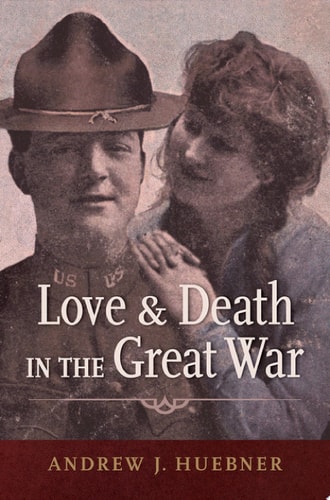
Love and Death in the Great War
0
0
As an Amazon Associate and affiliate partner, Menrva Books earns from qualifying purchases. Learn more
Author Description
Americans today harbor no strong or consistent collective memory of the First World War. Ask why the country fought or what they accomplished, and "democracy" is the most likely if vague response. The circulation of confusing or lofty rationales for intervention began as soon as President Woodrow Wilson secured a war declaration in April 1917. Yet amid those shifting justifications, Love and Death in the Great War argues, was a more durable and resonant one: Americans would fight for home and family. Officials in the military and government, grasping this crucial reality, invested the war with personal meaning, as did popular culture. "Make your mother proud of you/And the Old Red White and Blue" went George Cohan's famous tune "Over There." Federal officials and their allies in public culture, in short, told the war story as a love story.Intervention came at a moment when arbiters of traditional home and family were regarded as under pressure from all sides: industrial work, women's employment, immigration, urban vice, woman suffrage, and the imagined threat of black sexual aggression. Alleged German crimes in France and Belgium seemed to further imperil women and children. War promised to restore convention, stabilize gender roles, and sharpen male character. Love and Death in the Great War tracks such ideas of redemptive war across public and private spaces, policy and implementation, home and front, popular culture and personal correspondence. In beautifully rendered prose, Andrew J. Huebner merges untold stories of ordinary men and women with a history of wartime culture. Studying the radiating impact of war alongside the management of public opinion, he recovers the conflict's emotional dimensions--its everyday rhythms, heartbreaking losses, soaring possibilities, and broken promises.
Menrva's Summary
THE THESIS
This work investigates how the United States government and popular culture framed the First World War as a struggle to protect home and family, rather than solely as a geopolitical conflict. Andrew J. Huebner, a historian specializing in American culture and war, utilizes a wide array of primary sources—including personal correspondence, government policy documents, and popular media—to argue that the war was marketed as a means to restore traditional gender roles and social stability. By analyzing the intersection of public propaganda and private emotional experience, the author demonstrates how the conflict was imbued with personal meaning to secure domestic support for intervention.
THE SCOPE MAP
What You Will Find
- Analysis of wartime propaganda and its impact on public perception of the conflict.
- Examination of the intersection between military policy and domestic social anxieties regarding immigration, suffrage, and industrialization.
- Integration of personal letters and diaries from ordinary citizens alongside official government records.
Scope Limits
- The text does not provide a comprehensive military or tactical history of the combat operations in Europe.
- It does not focus on the international diplomatic negotiations between the Allied and Central powers.
THE AUTHORITY PERSPECTIVE
Historians and scholars of American cultural history frequently cite this text for its nuanced examination of the emotional and social underpinnings of the American war effort. Readers often note the author's ability to balance academic rigor with a clear, accessible narrative style.
Page Count:
402
Publication Date:
2018-01-01
Publisher:
Oxford University Press
ISBN-10:
0190853948
ISBN-13:
9780190853945
History
American History
World War
Soldiers
Social History
Military History
Community Tags
Similar Books