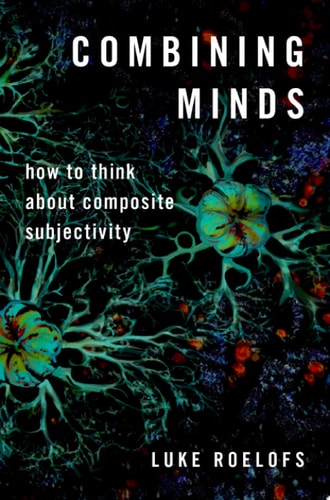
Combining Minds
0
0
As an Amazon Associate and affiliate partner, Menrva Books earns from qualifying purchases. Learn more
Author Description
Combining Minds Is About The Idea Of Minds Built Up Out Of Other Minds, Whether This Is Possible, And What It Would Mean If It Were. Roelofs Surveys Many Areas Of Philosophy And Psychology, Analysing And Evaluating Denials And Affirmations Of Mental Combination That Have Been Made In Regard To Everything From Brain Structure, To Psychological Conflict, To Social Cooperation. In Each Case, He Carefully Distinguishes Different Senses In Which Subjectivity Might Be Composite, And Different Arguments For And Against Them, Concluding That Composite Subjectivity, In Various Forms, May Be Much More Common Than We Think. Combining Minds Is Also The First Book-length Defence Of Constitutive Panpsychism Against All Aspects Of The 'combination Problem'. Constitutive Panpsychism Is An Increasingly Prominent Theory, Holding That Consciousness Is Naturally Inherent In Matter, With Human Consciousness Built Up Out Of This Basic Consciousness The Same Way Human Bodies Are Built Up Out Of Physical Matter. Such A View Requires That Many Very Simple Conscious Minds Can Compose A Single Very Complex One, And A Major Objection Made Against Constitutive Panpsychism Is That They Cannot - That Minds Simply Do Not Combine. This Is The Combination Problem, Which Roelofs Scrutinizes, Dissects, And Refutes. It Reflects Not Only Contemporary Debates But A Long Philosophical Tradition Of Contrasting The Apparently Indivisible Unity Of The Mind With The Deep And Pervasive Divisibility Of The Material World. Combining Minds Draws Together The Threads Of This Problem And Develops A Powerful And Flexible Response To It.
Menrva's Summary
THE THESIS
This book investigates the philosophical possibility of composite subjectivity, specifically addressing whether complex minds can be constructed from simpler, constituent conscious entities. Luke Roelofs, a philosopher specializing in the nature of consciousness, utilizes a rigorous analytical framework to evaluate the 'combination problem' within the context of constitutive panpsychism. By synthesizing perspectives from neuroscience, psychology, and classical metaphysics, he argues that the formation of complex mental states from simpler ones is not only theoretically plausible but likely a pervasive feature of reality.
THE SCOPE MAP
What You Will Find
- A comprehensive analysis of the 'combination problem' in constitutive panpsychism.
- A taxonomy of different senses in which subjectivity can be considered composite.
- Evaluations of mental combination across brain structure, psychological conflict, and social cooperation.
- A defense of the view that consciousness is inherent in matter.
Scope Limits
- The text does not provide empirical neurological data to prove the existence of panpsychism.
- It does not address theological or non-materialist interpretations of the mind.
THE AUTHORITY PERSPECTIVE
Experts recognize this work as a significant contribution to the contemporary debate surrounding panpsychism and the philosophy of mind. Readers frequently note the academic density of the prose, which requires a strong background in metaphysical inquiry to fully grasp the author's arguments.
Page Count:
272
Publication Date:
2019-01-01
Publisher:
Oxford University Press
ISBN-10:
0190859067
ISBN-13:
9780190859060
Philosophy
Psychology
Consciousness
Metaphysics
Philosophy of
Panpsychism