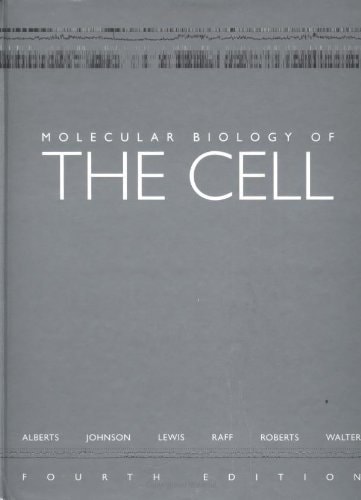
Molecular Biology of the Cell
0
0
As an Amazon Associate and affiliate partner, Menrva Books earns from qualifying purchases. Learn more
Author Description
Biological research is in an explosive phase, driven by a new awareness of the basic unity of all life forms. Today, the key to a problem about neurons, plant cells, or cancer may lie in research on yeasts, frogs, or flies. More than ever before, molecular genetics is showing us how to recognize and exploit such connections and is forcing us to reflect on the ancient origins of the components from which we are made. In surveying cell biology, one does not know whether to marvel more at the endless variety of living systems or at the fundamental similarities in the mechanisms by which all cells operate.
Menrva's Summary
THE THESIS
This text investigates the fundamental mechanisms that govern all living cells, positing that the unity of life forms allows for cross-disciplinary insights into biological function. Bruce Alberts, a distinguished biochemist and former president of the National Academy of Sciences, synthesizes decades of research to provide a comprehensive framework for understanding cellular processes. The book utilizes a comparative approach, drawing evidence from diverse model organisms—ranging from yeast to complex vertebrates—to illustrate the conserved molecular pathways that define life. By integrating molecular genetics with classical cell biology, the author establishes a rigorous foundation for analyzing how cellular components interact to sustain biological systems.
THE SCOPE MAP
What You Will Find
- Detailed analysis of cellular structures including membranes, organelles, and the cytoskeleton
- Comprehensive coverage of DNA replication, repair, and gene expression mechanisms
- Examination of cell signaling pathways and the regulation of the cell cycle
- Integration of experimental data from diverse model organisms to demonstrate evolutionary conservation
THE AUTHORITY PERSPECTIVE
This work is widely regarded as a definitive reference in the field, praised for its clarity and its ability to synthesize complex molecular data into a coherent pedagogical structure. The text serves as a standard resource for students and researchers alike, providing a rigorous and authoritative overview of the mechanisms that drive cellular life.
Page Count:
1616
Publication Date:
2002-01-01
Publisher:
Garland Science
ISBN-10:
0005583004
ISBN-13:
9780005583005
Science
Biology
Cell Biology
textbook
Genetics
Science & Math
Community Tags
Similar Books