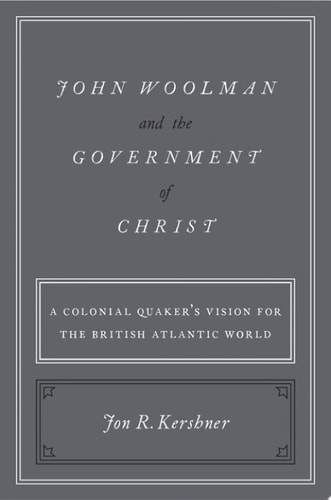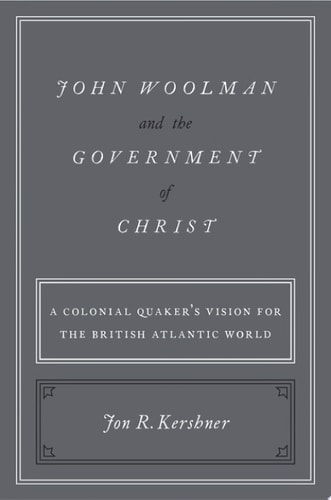
John Woolman and the Government of Christ: A Colonial Quaker's Vision for the British Atlantic World
0
0
As an Amazon Associate and affiliate partner, Menrva Books earns from qualifying purchases. Learn more
Author Description
In 1758, a Quaker tailor and sometime shopkeeper and school teacher stood up in a Quaker meeting and declared that the time had come for Friends to reject the practice of slavery. That man was John Woolman, and that moment was a significant step, among many, toward the abolition of slavery in the United States. Woolman's antislavery position was only one essential piece of his comprehensive theological vision for colonial American society. Drawing on Woolman's entire body of writing, Jon R. Kershner reveals that the theological and spiritual underpinnings of Woolman's alternative vision for the British Atlantic world were nothing less than a direct, spiritual christocracy on earth, what Woolman referred to as "the Government of Christ." Kershner argues that Woolman's theology is best understood as apocalyptic-centered on a supernatural revelation of Christ's immediate presence governing all aspects of human affairs, and envisaging the impending victory of God's reign over apostasy. John Woolman and the Government of Christ explores the theological reasoning behind Woolman's critique of the burgeoning trans-Atlantic economy, slavery, and British imperial conflicts, and fundamentally reinterprets 18th-century Quakerism by demonstrating the continuing influence of early Quaker apocalypticism.
Menrva's Summary
THE THESIS
This book investigates the theological framework of John Woolman, specifically his concept of a 'Government of Christ' as a critique of 18th-century colonial society. Jon R. Kershner, a scholar of Quaker history, utilizes Woolman's complete body of writing to argue that his antislavery activism was rooted in an apocalyptic vision of divine governance. By examining the intersection of spiritual revelation and social critique, Kershner positions Woolman's work as a direct challenge to the economic and imperial structures of the British Atlantic world.
THE SCOPE MAP
What You Will Find
- Analysis of 18th-century Quaker apocalypticism and its influence on social reform.
- Examination of Woolman's critique of the trans-Atlantic economy and imperial conflict.
- Theological interpretation of the 'Government of Christ' as a practical, lived reality.
Scope Limits
- The text does not provide a comprehensive biography of Woolman's personal life outside of his theological development.
- It does not focus on the broader political history of the British Empire beyond its direct interaction with Quaker theology.
THE AUTHORITY PERSPECTIVE
Scholars and historians of American religion recognize this work as a significant reinterpretation of 18th-century Quakerism. Readers frequently note the academic density of the prose, which provides a rigorous analysis of primary theological texts for those interested in the intellectual history of the period.
Page Count:
280
Publication Date:
2018-01-01
Publisher:
Oxford University Press
ISBN-10:
0190868090
ISBN-13:
9780190868093
History
Biography
Religion
Theology
Quaker Studies
American History