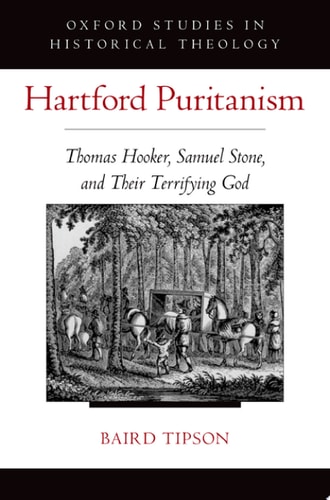
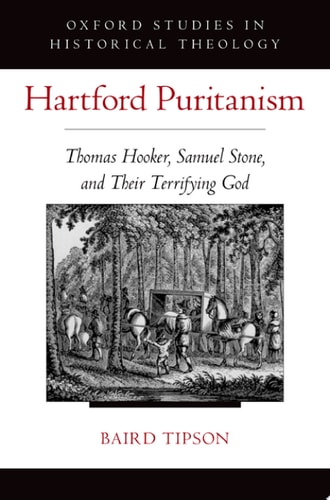
Hartford Puritanism: Thomas Hooker, Samuel Stone, and Their Terrifying God
0
0
As an Amazon Associate and affiliate partner, Menrva Books earns from qualifying purchases. Learn more
Author Description
Statues of Thomas Hooker and Samuel Stone grace downtown Hartford, Connecticut, but few residents are aware of the distinctive version of Puritanism that these founding ministers of Harford's First Church carried into to the Connecticut wilderness (or indeed that the city takes its name from Stone's English birthplace). Shaped by interpretations of the writings of Saint Augustine largely developed during the ministers' years at Emmanuel College, Cambridge, Hartford's church order diverged in significant ways from its counterpart in the churches of the Massachusetts Bay Colony.Hartford Puritanism argues for a new paradigm of New England Puritanism. Hartford's founding ministers, Baird Tipson shows, both fully embraced - and even harshened - Calvin's double predestination. Tipson explores the contributions of the lesser-known William Perkins, Alexander Richardson, and John Rogers to Thomas Hooker's thought and practice: the art and content of his preaching, as well as his determination to define and impose a distinctive notion of conversion on his hearers. The book draws heavily on Samuel Stone's The Whole Body of Divinity, a comprehensive exposition of his thought and the first systematic theology written in the American colonies. Virtually unknown today, The Whole Body of Divinity not only provides the indispensable intellectual context for the religious development of early Connecticut but also offers a more comprehensive description of the Puritanism of early New England than any other document.
Menrva's Summary
THE THESIS
This book investigates the distinct theological framework of Hartford Puritanism as established by Thomas Hooker and Samuel Stone, questioning how their specific interpretations of Calvinism and Augustinian thought diverged from the broader Massachusetts Bay Colony model. Baird Tipson, a scholar of American religious history, utilizes primary source documents—most notably Samuel Stone's 'The Whole Body of Divinity'—to reconstruct the intellectual environment of early Connecticut. He argues that the Hartford ministers adopted a more rigorous, and at times harsher, application of double predestination than their contemporaries. By tracing the influence of Emmanuel College and thinkers like William Perkins, Tipson provides a systematic analysis of how these ministers defined conversion and church order in the American wilderness.
THE SCOPE MAP
What You Will Find
- An analysis of the theological influence of Emmanuel College, Cambridge, on early American ministers.
- A detailed examination of Samuel Stone's 'The Whole Body of Divinity' as a primary systematic theology.
- Comparative studies between Hartford church practices and those of the Massachusetts Bay Colony.
- Exploration of the intellectual lineage connecting Saint Augustine, William Perkins, and Thomas Hooker.
Scope Limits
- The text focuses primarily on the specific theological contributions of Hooker and Stone rather than a general history of the Connecticut colony.
- It does not provide an exhaustive biography of the ministers' lives outside of their religious and intellectual development.
THE AUTHORITY PERSPECTIVE
Scholars and historians recognize this work as a significant contribution to the study of colonial American theology, particularly for its recovery of Samuel Stone's neglected writings. Readers frequently note the academic density of the prose, which is intended for those with a background in historical theology or early American religious studies.
Page Count:
496
Publication Date:
2015-01-01
Publisher:
Oxford University Press
ISBN-10:
0190266341
ISBN-13:
9780190266349
Biography
Religion
History
Puritanism
United States
English & College Success
Theology
Colonial History
English
American History
Fear Of God
Community Tags
Other Editions(2)
Similar Books