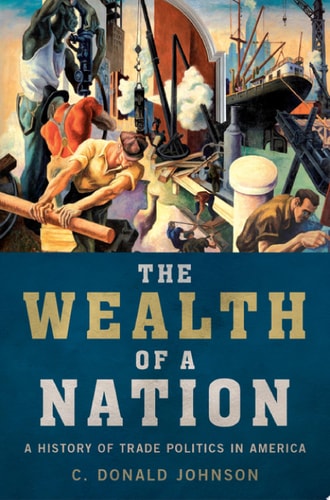
The Wealth of a Nation
0
0
As an Amazon Associate and affiliate partner, Menrva Books earns from qualifying purchases. Learn more
Author Description
The United States Is Entering A Period Of Profound Uncertainty In The World Political Economy--an Uncertainty Which Is Threatening The Liberal Economic Order That Its Own Statesmen Created At The End Of The Second World War. The Storm Surrounding This Threat Has Been Ignited By An Issue That Has Divided Americans Since The Nation's Founding: International Trade. Is America Better Off Under A Liberal Trade Regime, Or Would Protectionism Be More Beneficial? The Issue Divided Alexander Hamilton From Thomas Jefferson, The Agrarian South From The Industrializing North, And Progressives From Robber Barons In The Gilded Age. In Our Own Times, It Has Pitted Anti-globalization Activists And Manufacturing Workers Against Both Multinational Firms And The Bulk Of The Economics Profession. Ambassador C. Donald Johnson's The Wealth Of A Nation Is An Authoritative History Of The Politics Of Trade In America From The Revolution To The Trump Era. Johnson Begins By Charting The Rise And Fall Of The U.s. Protectionist System From The Time Of Alexander Hamilton To The Smoot-hawley Tariff Of 1930. Challenges To Protectionist Dominance Were Frequent And Often Serious, But The Protectionist Regime Only Faded In The Wake Of The Great Depression. After World War Ii, America Was The Primary Architect Of The Liberal Rules-based Economic Order That Has Dominated The Globe For Over Half A Century. Recent Years, However, Have Seen A Swelling Anti-free Trade Movement That Casts The Postwar Liberal Regime As Anti-worker, Pro-capital, And--in Donald Trump's View--even Anti-american. In This Riveting History, Johnson Emphasizes The Benefits Of The Postwar Free Trade Regime, But Focuses In Particular On How It Has Attempted To Advance Workers' Rights. This Analysis Of The Evolution Of American Trade Policy Stresses The Critical Importance Of The Multilateral Trading System's Survival And Defines The Central Political Struggle Between Business And Labor In Measuring The Wealth Of A Nation.
Menrva's Summary
THE THESIS
This book investigates whether the United States is better served by a liberalized international trade regime or a return to protectionist policies. Ambassador C. Donald Johnson, drawing on his extensive experience in trade policy, examines the historical tension between protectionism and free trade in America. He argues that the postwar liberal economic order, while imperfect, provides a necessary framework for global stability and the advancement of labor rights, contrasting this with the historical protectionist systems that defined the nation's early economic development.
THE SCOPE MAP
What You Will Find
- A chronological history of American trade policy from the Revolutionary era to the Trump administration.
- Analysis of the Smoot-Hawley Tariff and its impact on the Great Depression.
- Examination of the political conflict between business interests and labor movements regarding trade.
Scope Limits
- The text does not provide a comprehensive technical manual on modern trade law or specific tariff implementation procedures.
- It does not offer a predictive model for future global economic shifts beyond the current political climate.
THE AUTHORITY PERSPECTIVE
Experts recognize this work as a comprehensive historical survey of American trade politics that effectively contextualizes contemporary debates. Readers often note that the prose is accessible to non-specialists while maintaining the analytical rigor expected of a seasoned diplomat.
Page Count:
608
Publication Date:
2018-01-01
Publisher:
Oxford University Press
ISBN-10:
019086592X
ISBN-13:
9780190865924
Economics
History
International Trade
American History
Public Policy
Community Tags
Similar Books