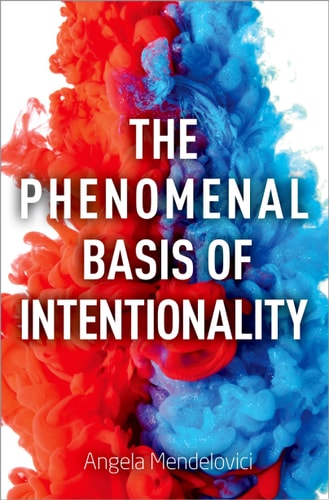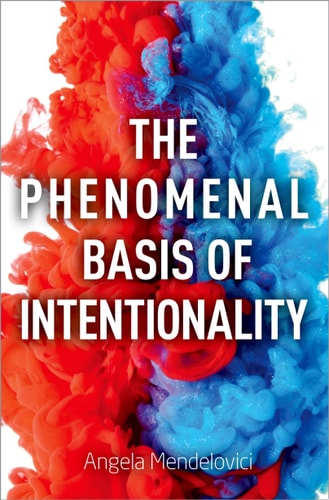
The Phenomenal Basis of Intentionality
0
0
As an Amazon Associate and affiliate partner, Menrva Books earns from qualifying purchases. Learn more
Author Description
Intentionality is the mind's ability to be "of," "about," or "directed" at things, or to "say" something. For example, a thought might "say" that grass is green or that Santa Claus is jolly, and a visual experience might be "of" a blue cup. While the existence of the phenomenon of intentionality is manifestly obvious, how exactly the mind gets to be "directed" at things, which may not even exist, is deeply mysterious and controversial. It has been long assumed that the best way to explain intentionality is in terms of tracking relations, information, functional roles, and similar notions. This book breaks from this tradition, arguing that the only empirically adequate and in principle viable theory of intentionality is one in terms of phenomenal consciousness, the felt, subjective, or qualitative feature of mental life. According to the theory advanced by Mendelovici, the phenomenal intentionality theory, there is a central kind of intentionality, phenomenal intentionality, that arises from phenomenal consciousness alone, and any other kind of intentionality derives from it. The phenomenal intentionality theory faces important challenges in accounting for the rich and sophisticated contents of thoughts, broad and object-involving contents, and nonconscious states. Mendelovici proposes a novel and particularly strong version of the theory that can meet these challenges. The end result is a radically internalistic picture of the mind, on which all phenomenally represented contents are literally in our heads, and any non-phenomenal contents we in some sense represent are expressly singled out by us.
Menrva's Summary
THE THESIS
This book investigates the core question of how the mind achieves intentionality, arguing that it is fundamentally grounded in phenomenal consciousness rather than external tracking or functional roles. Angela Mendelovici, a philosopher specializing in the mind, challenges traditional externalist accounts of mental representation. She proposes the phenomenal intentionality theory, which posits that all intentional content originates from the subjective, qualitative features of mental life. By addressing common objections regarding nonconscious states and object-involving content, she constructs a robust internalist framework for understanding mental directedness.
THE SCOPE MAP
What You Will Find
- A comprehensive defense of the phenomenal intentionality theory.
- Analysis of the relationship between consciousness and mental representation.
- Strategies for reconciling internalism with complex, non-phenomenal content.
- Critiques of traditional tracking and functionalist theories of mind.
Scope Limits
- The text does not provide a neurobiological mapping of these mental states.
- It does not focus on social or linguistic theories of intentionality outside of the internalist framework.
THE AUTHORITY PERSPECTIVE
Philosophers and cognitive scientists frequently cite this work as a significant contribution to the internalist debate within the philosophy of mind. Readers often note the technical rigor of the prose, which requires a foundational understanding of contemporary analytic philosophy to fully grasp the arguments presented.
Page Count:
296
Publication Date:
2018-01-01
Publisher:
Oxford University Press
ISBN-10:
019086382X
ISBN-13:
9780190863821
Philosophy
Philosophy of
Consciousness Studies
Phenomenology
Mind & Body
Epistemology