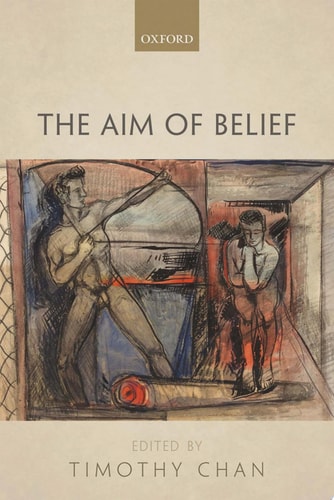
The Aim of Belief
0
0
As an Amazon Associate and affiliate partner, Menrva Books earns from qualifying purchases. Learn more
Author Description
What is belief? "Beliefs aim at truth" is the commonly accepted starting point for philosophers who want to give an adequate account of this fundamental state of mind, but it raises as many questions as it answers. For example, in what sense can beliefs be said to have an aim of their own? If belief aims at truth, does it mean that reasons to believe must also be based on truth? Must beliefs be formed on the basis of evidence alone? Is truth the constitutive norm of belief? Does aiming at truth bring in a normative dimension to the nature of belief? How can the aim of truth guide the formation of our beliefs? In what ways do partial beliefs aim at truth? Is truth the aim of epistemic justification? Last but not least, is it knowledge rather than truth which is the fundamental aim of belief? In recent years, pursuing these questions has proved extremely fertile for our understanding of a wide range of current issues in philosophy of mind and action, epistemology, and meta-ethics. The Aim of Belief is the first book to be devoted to this fast-growing topic. It brings together eleven newly commissioned essays by leading authors on the aim of belief. The volume not only reflects the state of the art, but further advances the current debate. It will be key reading for researchers and students of philosophy interested in mind, knowledge and reason.
Menrva's Summary
THE THESIS
This volume investigates the philosophical proposition that belief is constitutively aimed at truth and examines the implications of this norm for epistemic justification and mental agency. Editor Timothy Chan compiles eleven original essays from prominent philosophers to address whether truth serves as the fundamental norm of belief or if knowledge occupies that role. The contributors analyze the normative dimensions of belief formation, the relationship between evidence and truth, and how these concepts influence current debates in epistemology and meta-ethics.
THE SCOPE MAP
What You Will Find
- Analysis of the constitutive norms of belief
- Examination of the relationship between truth, evidence, and epistemic justification
- Discussions on partial beliefs and their orientation toward truth
- Theoretical frameworks connecting belief to action and meta-ethics
Scope Limits
- Does not provide a singular, unified theory of belief but rather presents a collection of competing perspectives
- Focuses primarily on analytic philosophy rather than historical or continental approaches
THE AUTHORITY PERSPECTIVE
Experts identify this collection as a foundational resource for those studying the intersection of mind, knowledge, and reason. Scholars frequently note that the text provides a comprehensive overview of the current state of the art regarding the normativity of belief.
Page Count:
256
Publication Date:
2013-01-01
Publisher:
OUP Oxford
ISBN-10:
0191652237
ISBN-13:
9780191652233
Non-Fiction
Philosophy
Knowledge Theory
Mind & Body
Meta-ethics
Philosophy of
Epistemology
Community Tags
Similar Books