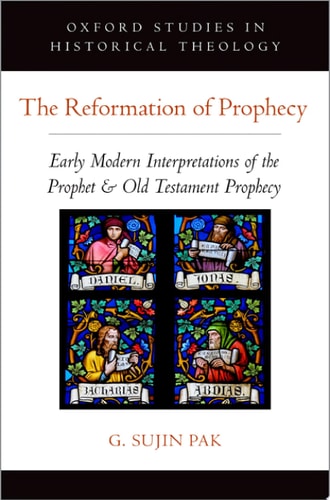
The Reformation of Prophecy: Early Modern Interpretations of the Prophet & Old Testament Prophecy
0
0
As an Amazon Associate and affiliate partner, Menrva Books earns from qualifying purchases. Learn more
Author Description
Protestant reformers found the prophet and biblical prophecy to be exceptionally effective for framing their reforming work under the authority of Scripture-for the true prophet speaks the Word of God alone and calls the people, their worship, and their beliefs and practices back to the Word of God.uses the prophet and biblical prophecy as a powerful lens through which to view many aspects of the reformers in the sixteenth and seventeenth centuries. G. Sujin Pak argues that these prophetic concepts served the substantial purposes of articulating a theology of the priesthood of all believers, a biblical model of the pastoral office, a biblical vision of the reform of worship, and biblical processes for discerning right interpretation of Scripture. Pak demonstrates the ways in which understandings of the prophet and biblical prophecy contributed to the formation of distinct confessional identities. She goes on to demonstrate the waning of explicit prophetic terminology, particularly among the next generation of Protestant leadership. Eventually, she shows, the Protestant reformers concluded that the figure of the prophet carried with it as many problems as it did benefits, though they continued to give much time and attention to the exegesis of biblical prophetic writings.
Menrva's Summary
THE THESIS
How did the figure of the prophet and the concept of biblical prophecy function as a rhetorical and theological framework for Protestant reformers during the sixteenth and seventeenth centuries? G. Sujin Pak, a scholar of historical theology, examines the intersection of biblical exegesis and ecclesiastical reform. She argues that reformers utilized prophetic models to legitimize their authority, define the pastoral office, and establish distinct confessional identities before eventually distancing themselves from the explicit prophetic label.
THE SCOPE MAP
What You Will Find
- Analysis of sixteenth and seventeenth-century Protestant theological discourse.
- Examination of the priesthood of all believers and the pastoral office through a prophetic lens.
- Historical investigation into the evolution of confessional identity formation.
- Study of the shift in hermeneutical approaches to Old Testament prophetic texts.
Scope Limits
- The study focuses primarily on Protestant reformers and does not provide an exhaustive survey of Catholic or Radical Reformation prophetic interpretations.
- The analysis concludes as the explicit use of prophetic terminology wanes in later generations.
THE AUTHORITY PERSPECTIVE
Scholars recognize this work as a significant contribution to the study of Reformation-era hermeneutics and the development of Protestant ecclesiology. Readers frequently note the academic density of the prose and the depth of the historical research provided by the author.
Page Count:
388
Publication Date:
2018-01-01
Publisher:
Oxford University Press
ISBN-10:
0190866942
ISBN-13:
9780190866945
Religion
History
Reformation
Christianity
Theology
History - Modern
Community Tags
Similar Books