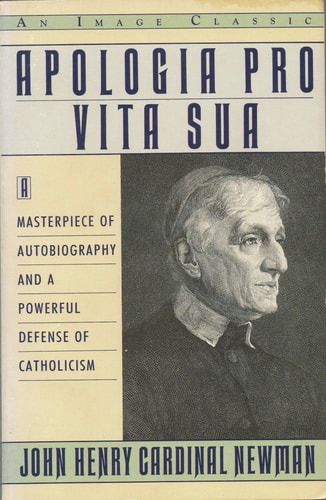
Apologia Pro Vita Sua
0
0
As an Amazon Associate and affiliate partner, Menrva Books earns from qualifying purchases. Learn more
Author Description
Excerpt:...from the time that I was first unsettled, did I ever attempt to gain any one over to myself or to my Romanizing opinions, and that it is only his own coxcombical fancy which has bred such a thought in him: but my imagination is at a loss in presence of those vague charges, which have commonly been brought against me, charges, which are made up of impressions, and understandings, and inferences, and hearsay, and surmises. Accordingly, I shall not make the attempt, for, in doing so, I should be dealing blows in the air; what I shall attempt is to state what I know of myself and what I recollect, and leave its application to others. While I had confidence in the Via Media, and thought that nothing could overset it, I did not mind laying down large principles, which I saw would go further than was commonly perceived. I considered that to make the Via Media concrete and substantive, it must be much more than it was in outline; that the Anglican Church must have a ceremonial, a ritual, and a fulness of doctrine and devotion, which it had not at present, if it were to compete with the Roman Church with any prospect of success. Such additions would not remove it from its proper basis, but would merely strengthen and beautify it: such, for instance, would be confraternities, particular devotions, reverence for the Blessed Virgin, prayers for the dead, beautiful churches, rich offerings to them and in them, monastic houses, and many other observances and institutions, which I used to say belonged to us as much as to Rome, though Rome had appropriated them, and boasted of them, by reason of our having let them slip from us. The principle, on which all this turned, is brought out in one of the letters I published on occasion of Tract 90. "The age is moving," I said, "towards something; and most unhappily the one religious communion among us, which has of late years been practically in possession of this something, is the Church of Rome. She alone, amid all the...
Menrva's Summary
THE THESIS
John Henry Newman investigates the intellectual and spiritual trajectory that led him to abandon the Anglican Church for Roman Catholicism. The author, a prominent nineteenth-century theologian and leader of the Oxford Movement, constructs a rigorous defense against contemporary accusations of dishonesty and inconsistency. By examining his own history, correspondence, and theological development, Newman provides a methodical account of his conversion, aiming to clarify his motivations and the logical progression of his religious convictions.
THE SCOPE MAP
What You Will Find
- A detailed chronological account of the Oxford Movement and the development of the Via Media.
- Primary source documentation including personal letters, tracts, and theological reflections.
- An analysis of the doctrinal differences between Anglicanism and Roman Catholicism.
- A philosophical exploration of the nature of religious belief and the role of conscience in conversion.
THE AUTHORITY PERSPECTIVE
This work is regarded as a seminal text in the history of religious autobiography, noted for its intellectual precision and candid self-examination. The text serves as an essential primary source for scholars studying Victorian religious history and the theological shifts of the nineteenth century.
Page Count:
384
Publication Date:
1864-01-01
Publisher:
DENT / DUTTO <020357
ISBN-10:
0006229123
ISBN-13:
9780006229124
Philosophy
Autobiography
Biography
Religion
History
Church History
Theology
Christianity
Community Tags
Similar Books