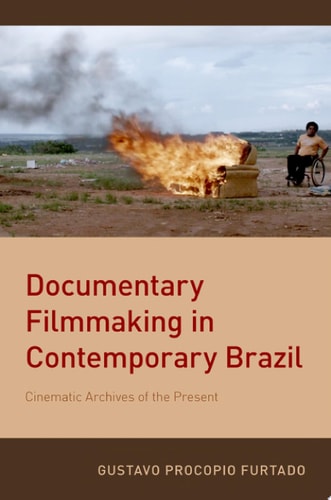
Documentary Filmmaking in Contemporary Brazil: Cinematic Archives of the Present
0
0
As an Amazon Associate and affiliate partner, Menrva Books earns from qualifying purchases. Learn more
Author Description
Winner of the 2020 Antonio Candido Prize for Best Book in the Humanities from the Brazil section of the Latin American Studies Association This book examines the vibrant field of documentary filmmaking in Brazil from the transition to democracy in 1985 to the present. Marked by significant efforts toward the democratization of Brazil's highly unequal society, this period also witnessed the documentary's rise to unprecedented vitality in quantity, quality, and diversity of production-which includes polished auteur films as well as rough-hewn collaborative works, films made in major metropolitan regions as well as in indigenous villages and in remote parts of the Amazon, intimate first-person documentaries as well as films that dive headfirst into struggles for social justice. The transformations of Brazilian society and of filmmaking coalesce and become entangled in this cinema's preoccupation with archives. Historically linked to the exercise and maintenance of power, the concept of the archive is critical for the documentary as a cultural practice that preserves images from the present for the future, unearths and repurposes visual materials from the past, and is historically invested in filmic images as records of the real. Contemporary films incorporate, reflect on, and rework a variety of archives, such as documents produced by official institutions, ethnographic images, home movies, and photo albums-and engage not only with what is preserved but also with lacunas in the record and with alternate forms of remembering, retrieving, and transmitting the past. Through its interaction with archives, this book argues, the contemporary documentary reflects on and intervenes in the distribution of visibilities and invisibilities, centers and margins, silences and speech, living memory and its preservation in the record-thus locating the documentary on archival borders that concern Brazilian society and filmmaking alike.
Menrva's Summary
THE THESIS
This book investigates how contemporary Brazilian documentary filmmakers utilize the concept of the archive to navigate, preserve, and challenge the socio-political landscape of Brazil from 1985 to the present. Gustavo Procopio Furtado, a scholar of Latin American cinema, synthesizes film theory with historical analysis to argue that the documentary form serves as a critical site for negotiating power, memory, and visibility. By examining a diverse range of cinematic works, the author demonstrates how filmmakers repurpose institutional and personal archives to address the inequalities and silences inherent in the national record.
THE SCOPE MAP
What You Will Find
- Analysis of Brazilian documentary production from the 1985 democratic transition to the present.
- Theoretical framework regarding the intersection of archival practice and cinematic representation.
- Examination of diverse film formats, including auteur cinema, collaborative works, and indigenous filmmaking.
- Case studies of films utilizing official documents, ethnographic footage, and personal media.
Scope Limits
- The study focuses specifically on Brazilian cinema and does not provide a comparative analysis of documentary practices in other Latin American nations.
- The text prioritizes the archival function of film over a comprehensive chronological history of all Brazilian documentary directors.
THE AUTHORITY PERSPECTIVE
Scholars and film critics recognize this work as a significant contribution to the study of Latin American media, particularly for its nuanced treatment of the archive as a political tool. Readers frequently note the academic density of the prose, which is well-suited for researchers and students of film history and visual culture.
Page Count:
273
Publication Date:
2018-01-01
Publisher:
Oxford University Press
ISBN-10:
0190867078
ISBN-13:
9780190867072
History
Film Studies
American History
Media Studies
Documentary films
Graphic ArtsCommunicationsDesign
Professional Career & Trade
Documentary
Latin America
Community Tags
Similar Books