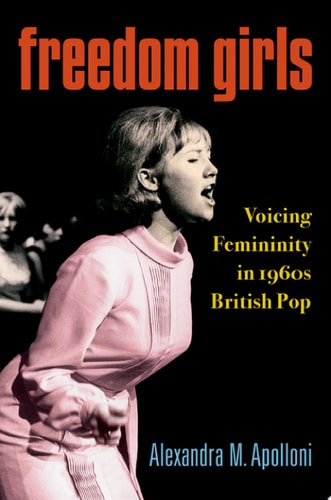
Freedom Girls: Voicing Femininity in 1960s British Pop
0
0
As an Amazon Associate and affiliate partner, Menrva Books earns from qualifying purchases. Learn more
Author Description
Freedom Girls: Voicing Femininity in 1960s British Pop shows how the vocal performances of girl singers in 1960s Britain defined-and sometimes defied-ideas about what it meant to be a young woman in the 1960s British pop music scene. The singing and expressive voices of Sandie Shaw, Cilla Black, Millie Small, Dusty Springfield, Lulu, Marianne Faithfull, and P.P. Arnold, reveal how vocal sound shapes access to social mobility, and consequently, access to power and musical authority. The book examines how Sandie Shaw and Cilla Black's ordinary girl personas were tied to whiteness and, in Black's case, her Liverpool origins. It shows how Dusty Springfield and Jamaican singer Millie Small engaged with the transatlantic sounds of soul and and ska, respectively, transforming ideas about musical genre, race, and gender. It reveals how attitudes about sexuality and youth in rock culture shaped the vocal performances of Lulu and Marianne Faithfull, and how P.P. Arnold has re-narrated rock history to center Black women's vocality. Freedom Girls draws on a broad array of archival sources, including music magazines, fashion and entertainment magazines produced for young women, biographies and interviews, audience research reports, and others to inform analysis of musical recordings (including such songs as "As Tears Go By," "Son of a Preacher Man," and others) and performances on television programs such as Ready Steady Go!, Shindig, and other 1960s music shows. These performances reveal the historical and contemporary connections between voice, social mobility, and musical authority, and demonstrate how singers used voice to navigate the boundaries of race, class, and gender.
Menrva's Summary
THE THESIS
This book investigates how the vocal performances of female singers in 1960s Britain functioned as a primary site for negotiating social mobility, gender roles, and musical authority. Alexandra M. Apolloni, a musicologist, utilizes a framework of vocal analysis combined with cultural history to examine how specific artists navigated the constraints of race, class, and gender within the burgeoning British pop industry. By analyzing the intersection of sound and identity, the author argues that these singers were not merely performers but active agents in shaping the cultural landscape of the decade.
THE SCOPE MAP
What You Will Find
- Analysis of vocal techniques and performance styles of artists including Sandie Shaw, Cilla Black, Dusty Springfield, and P.P. Arnold.
- Examination of the influence of transatlantic genres like soul and ska on British pop identity.
- Integration of archival materials such as music magazines, audience research reports, and television performance footage.
- Case studies on the intersection of regional identity, whiteness, and class in the music industry.
Scope Limits
- The analysis is primarily focused on the British pop music scene and does not provide a comprehensive history of global 1960s music.
- The study prioritizes vocal performance and identity over the technical aspects of music production or recording engineering.
THE AUTHORITY PERSPECTIVE
Scholars in musicology and cultural studies recognize this work as a significant contribution to the study of gender and voice in popular music. Readers frequently note the academic rigor of the text, which successfully bridges the gap between music theory and historical sociological analysis.
Page Count:
335
Publication Date:
2021-01-01
Publisher:
Oxford University Press
ISBN-10:
0190879920
ISBN-13:
9780190879921
Sociology
Pop Music
Gender Studies
Music History
Criticism history
1960s
Humanities
Community Tags
Similar Books