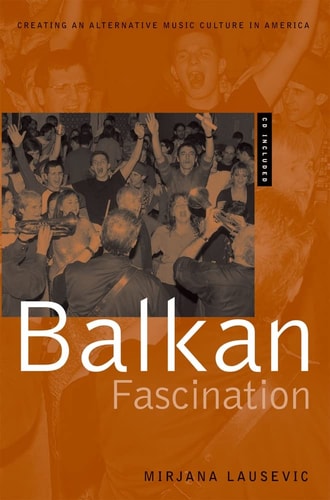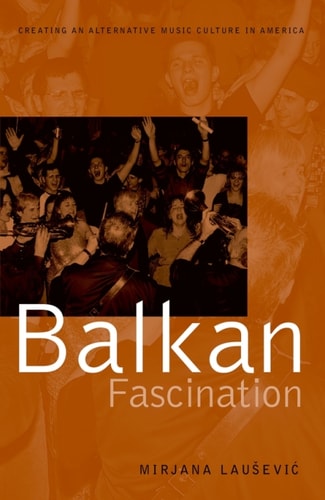
Balkan Fascination: Creating an Alternative Music Culture in America
0
0
As an Amazon Associate and affiliate partner, Menrva Books earns from qualifying purchases. Learn more
Author Description
Divi Zheni identifies itself as a Bulgarian women's chorus and band, but it is located in Boston and none of its members come from Bulgaria. Zlatne Uste is one of the most popular purveyors of Balkan music in America, yet the name of the band is grammatically incorrect. The members of Sviraci hail from western Massachusetts, upstate New York, and southern Vermont, but play tamburica music on traditional instruments. Curiously, thousands of Americans not only participate in traditional music and dance from the Balkans, but in fact structure their social practices around it without having any other ties to the region. In Balkan Fascination, ethnomusicologist Mirjana Lausevic, a native of the Balkans, investigates this remarkable phenomenon to explore why so many Americans actively participate in specific Balkan cultural practices to which they have no familial or ethnic connection. Going beyond traditional interpretations, she challenges the notion that participation in Balkan culture in North America is merely a specialized offshoot of the 1960s American folk music scene. Instead, her exploration of the relationship between the stark sounds and lively dances of the Balkan region and the Americans who love them reveals that Balkan dance and music has much deeper roots in America's ideas about itself, its place in the world, and the place of the world's cultures in the American melting pot. Examining sources that span more than a century and come from both sides of the Atlantic, Lausevic shows that an affinity group's debt to historical movements and ideas, though largely unknown to its members, is vital in understanding how and why people make particular music and dance choices that substantially change their lives.
Menrva's Summary
THE THESIS
This book investigates why thousands of Americans with no familial or ethnic ties to the Balkans actively participate in and structure their social lives around traditional Balkan music and dance. Ethnomusicologist Mirjana Lausevic, a native of the region, utilizes a combination of historical research and ethnographic observation to challenge the assumption that this subculture is merely a byproduct of the 1960s American folk revival. She argues that these musical practices are deeply rooted in broader American concepts of identity, global cultural integration, and the historical evolution of the American melting pot.
THE SCOPE MAP
What You Will Find
- Historical analysis of American engagement with Balkan cultural practices spanning over a century.
- Case studies of specific American-based ensembles such as Divi Zheni, Zlatne Uste, and Sviraci.
- Examination of the intersection between immigrant cultural preservation and American social identity.
Scope Limits
- The study does not provide a comprehensive history of Balkan music itself, focusing instead on its reception and adoption within the United States.
- The analysis does not cover every regional variation of Balkan music, prioritizing the specific traditions adopted by the American groups studied.
THE AUTHORITY PERSPECTIVE
Scholars and ethnomusicologists recognize this work as a significant contribution to the study of transnational cultural adoption and the sociology of music. Readers frequently note that the text provides a rigorous academic framework for understanding how affinity groups construct identity through the performance of non-native traditions.
Page Count:
309
Publication Date:
2007-01-01
Publisher:
Oxford University Press
ISBN-10:
0190292415
ISBN-13:
9780190292416
American Studies
Humanities
Music History
Balkan Studies
Sociology
Criticism history