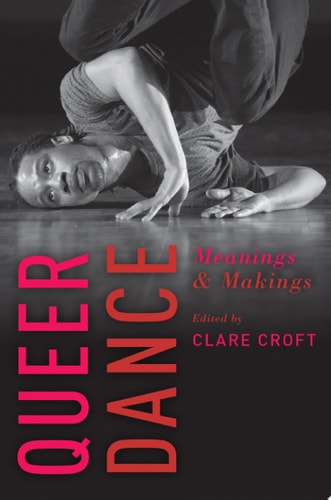
Queer Dance
0
0
As an Amazon Associate and affiliate partner, Menrva Books earns from qualifying purchases. Learn more
Author Description
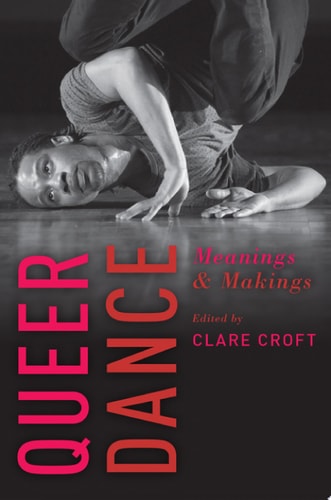
If we imagine multiple ways of being together, how might that shift choreographic practices and help us imagine ways groups assemble in more varied ways than just pairing another man with another woman? How might dancing queerly ask us to imagine futures through something other than heterosexuality and reproduction? How does challenging gender binaries always mean thinking about race, thinking about the postcolonial, about ableism? What are the arbitrary rules structuring dance in all its arenas, whether concert and social or commercial and competition, and how do we see those invisible structures and work to disrupt them?Queer Dance brings together artists and scholars in a multi-platformed project-book, accompanying website, and live performance series to ask, "How does dancing queerly progressively challenge us?" The artists and scholars whose writing appears in the book and whose performances and filmed interviews appear online stage a range of genders and sexualities that challenge and destabilize social norms. Engaging with dance making, dance scholarship, queer studies, and other fields, Queer Dance asks how identities, communities, and artmaking and scholarly practices might consider what queer work the body does and can do. There is great power in claiming queerness in the press of bodies touching or in the exceeding of the body best measured in sweat and exhaustion. How does queerness exist in the realm of affect and touch, and what then might we explore about queerness through these pleasurable and complex bodily ways of knowing?
Menrva's Summary
THE THESIS
This book investigates how choreographic practices and the physical act of dancing can challenge heteronormative structures, gender binaries, and social hierarchies. Editor Clare Croft, a scholar and practitioner in the field of dance studies, compiles a multi-platform project that synthesizes academic inquiry with artistic performance to examine how queer identity informs bodily movement and community assembly.
THE SCOPE MAP
What You Will Find
- Theoretical frameworks connecting queer studies to dance scholarship
- Case studies of artists and performers who destabilize traditional gender roles
- Intersectional analysis of race, postcolonialism, and ableism within dance arenas
- Multi-modal content including links to filmed interviews and performance documentation
Scope Limits
- The text does not provide a comprehensive history of all queer dance movements
- It does not focus on technical instruction for specific dance styles or genres
THE AUTHORITY PERSPECTIVE
Scholars and practitioners in the performing arts recognize this work as a significant contribution to the intersection of somatic practice and queer theory. Readers frequently note the academic density of the prose, which serves as a resource for those interested in the political and social implications of movement.
Page Count:
333
Publication Date:
2017-01-01
Publisher:
Oxford University Press
ISBN-10:
0190646772
ISBN-13:
9780190646776
Dance
Sociology
Queer Studies
Gender Studies
Humanities