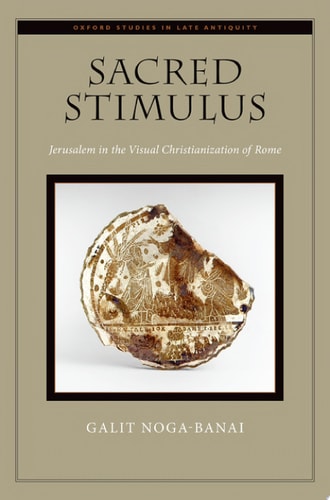
Sacred Stimulus
0
0
As an Amazon Associate and affiliate partner, Menrva Books earns from qualifying purchases. Learn more
Author Description
Sacred Stimulus Offers A Thorough Exploration Of Jerusalem's Role In The Formation And Formulation Of Christian Art In Rome During The Fourth And Fifth Centuries. The Visual Vocabulary Discussed By Galit Noga-banai Gives An Alternative Access Point To The Mnemonic Efforts Conceived While Rome Converted To Christianity: Not In Comparison To Pagan Art In Rome, Not As Reflecting The Struggle With The Emergence Of New Rome In The East (constantinople), But Rather As Visual Expressions Of The Confrontation With Earthly Jerusalem And Its Holy Places. After All, Jerusalem Is Where The Formative Events Of Christianity Occurred And Were Memorialized. Sacred Stimulus Argues That, Already In The Second Half Of The Fourth Century, Rome Constructed Its Own Set Of Holy Sites And Foundational Myths, While Expropriating For Its Own Use Some Of Jerusalem's Sacred Relics, Legends, And Sites. Relying Upon Well-known And Central Works Of Art, Including Mosaic Decoration, Sarcophagi, Wall Paintings, Portable Art, And Architecture, Noga-banai Exposes The Omnipresence Of Jerusalem And Its Position In The Genesis Of Christian Art In Rome. Noga-banai's Consideration Of Earthly Jerusalem As A Conception That Rome Used, Or Had To Take Into Account, In Constructing Its Own New Christian Ideological And Cultural Topography Of The Past, Sheds Light On Connections And Analogies That Have Not Necessarily Been Preserved In The Written Evidence, And Offers Solutions To Long-standing Questions Regarding Specific Motifs And Scenes.
Menrva's Summary
THE THESIS
This work investigates how the city of Jerusalem functioned as a primary conceptual driver in the development of Christian visual culture in Rome during the fourth and fifth centuries. Galit Noga-Banai, an expert in late antique art, utilizes a rigorous analysis of material culture to argue that Rome did not merely react to pagan traditions or the rise of Constantinople. Instead, the author posits that Rome actively constructed its own sacred topography by appropriating the myths, relics, and imagery associated with the physical sites of Jerusalem to establish its own Christian identity.
THE SCOPE MAP
What You Will Find
- Analysis of mosaic decorations, sarcophagi, wall paintings, and portable art objects.
- Examination of architectural developments in early Christian Rome.
- A framework for understanding the mnemonic function of religious art.
Scope Limits
- The study does not focus on the political rivalry between Rome and Constantinople.
- It does not provide a comprehensive history of pagan art in Rome.
THE AUTHORITY PERSPECTIVE
Scholars recognize this text as a significant contribution to the study of late antique visual culture and the construction of religious identity. Readers frequently note the academic density of the prose, which provides a specialized analysis of how physical artifacts served as ideological tools in the early Church.
Page Count:
320
Publication Date:
2018-01-01
Publisher:
Oxford University Press
ISBN-10:
019087466X
ISBN-13:
9780190874667
History
Rome
Christianity
Archaeology
Art History
Community Tags
Similar Books