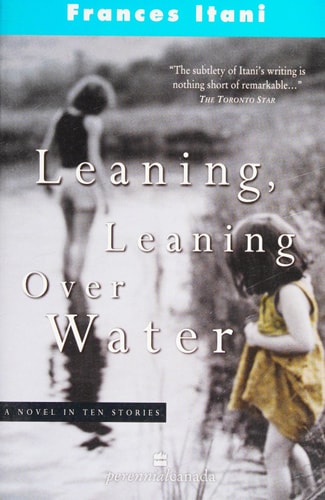
Leaning, Leaning Over Water
0
0
As an Amazon Associate and affiliate partner, Menrva Books earns from qualifying purchases. Learn more
Author Description
As noted by Quill & Quire, Frances Itani is an awardwinning writer. Most recently, she won the Tilden/Saturday Night/CBC LiteraryAward for two consecutive years; an impressive feat as the stories are submittedto the jurors for evaluation anonymously. Now, Itani expands her controlof the short story medium, with her new novel, LEANING, LEANING OVER WATER,a series of connected short stories.Almost all the narration is by Trude, the middle child of the King family.She has been told that her position in the family makes her the family collectorand teller of stories. The stories she recounts crystallize crucial momentsduring the life of her family, the people around them, and the social climate ofpre-Quiet Revolution Quebec.The stories begin after the father has moved his family to a rural area onthe Quebec side of the Ottawa River, where he has taken a job paintingfleur-de-lis on tin trays in a nearby factory. For the children this means theygrow up in delightful wilderness surrounded by people and customs which arecompletely new, but leaves their English speaking, non-swimming mother inisolation. The family is cut off from much of the world, but there is much ofthe world around them. They learn of their individuality through the culturaldifferences they find between themselves and their nearest neighbours, the RomanCatholic family down the way. They learn about sex and despair first handthrough the few adults around them. And they are constantly exposed to life anddeath, and miracles through their constant contact with the river itself.The Ottawa River ( the "water" referred to in the title) bordersthe King family abode and wends its way through every story in the novel --always rushing past, bringing with it joys and sorrows, its power never to beunderestimated, nor taken lightly -- underscoring the frailty of life lived onits banks.
Menrva's Summary
THE PULSE
The arrival of the King family in a rural Quebec wilderness forces young Trude to navigate the complexities of isolation, cultural friction, and the relentless presence of the Ottawa River. As the middle child, Trude assumes the role of family chronicler, observing the shifting dynamics between her English-speaking parents and their French-speaking neighbors. The narrative unfolds through a series of interconnected stories that capture the family's struggle to reconcile their identity against the backdrop of a changing social climate. Trude’s perspective serves as the primary lens, documenting the transition from childhood innocence to a stark awareness of adult despair and mortality.
INSIDE THE PAGES
- Interconnected short story structure forming a cohesive narrative arc
- First-person narration through the eyes of the protagonist, Trude
- Exploration of cultural and linguistic divides in pre-Quiet Revolution Quebec
- The Ottawa River functioning as a central, recurring symbolic motif
- Focus on the domestic sphere and the isolation of the immigrant or outsider experience
- Themes of mortality, faith, and the loss of innocence
- Detailed sensory descriptions of the rural wilderness environment
- Episodic pacing that highlights specific, transformative moments in the family history
THE COLLECTIVE ECHO
This work is characterized by its quiet, observational style and its focus on the internal development of the protagonist. The narrative structure suggests a deliberate pacing that mirrors the slow, steady movement of the river itself. Themes of cultural displacement and the fragility of family life appear to be central to the author's exploration of the Quebec landscape. The prose likely emphasizes the weight of memory and the significance of small, domestic events in shaping a child's worldview.
Page Count:
206
Publication Date:
2002-12-30
Publisher:
Phyllis Bruce Books Perennial
ISBN-10:
0006392504
ISBN-13:
9780006392507
Literary Fiction
Coming of Age
Literature & Fiction
Genre Fiction
Historical
Literary
Canadian
Community Tags
Similar Books