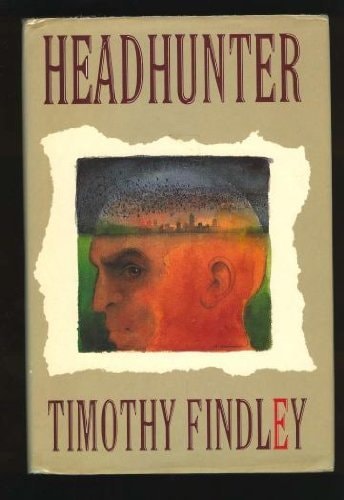
Headhunter
0
0
As an Amazon Associate and affiliate partner, Menrva Books earns from qualifying purchases. Learn more
Author Description
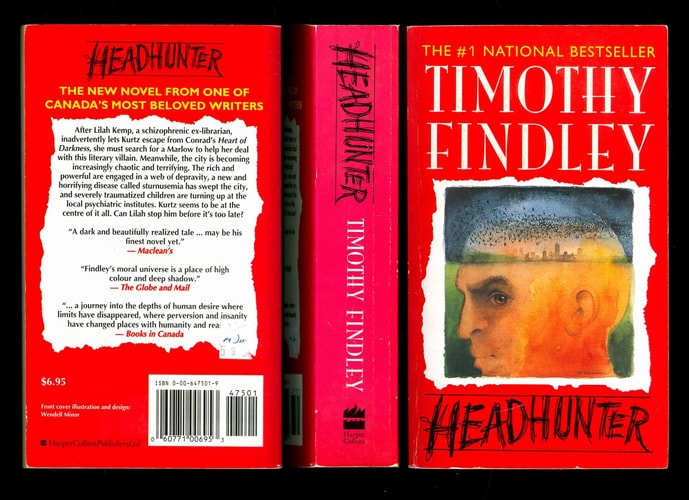
It doesn't take long to discover the literary classic at the heart of Timothy Findley's dystopian novel Headhunter. Lilah Kemp, schizophrenic and one of a triumvirate of main characters, announces in the opening scene that she may have released the character of Kurtz from the pages of Joseph Conrad's novel Heart of Darkness. Add to this fantastic formula a couple of psychiatrists named Charles Marlow and Rupert Kurtz and a huge cast of secondary players set in a futuristic pollution- and plague-ravaged Toronto, and you are left with a bizarre reinterpretation of not just one of the classics of literature, but the age-old tale of power and corruption itself. Conrad did not invent this story, Findley shrewdly points out; he just gave it a Kurtz. This is vintage Findley, who similarly re-imagined the Old Testament story of Noah and the Flood in Not Wanted on the Voyage. Headhunter is another example of Findley's ability to blend morality and entertainment. Findley's willingness to blend literature and pulp is Headhunter 's greatest asset. You can get lost in the rollicking good fun of the sci-fi dystopia or you can dredge its depths for literary clues. Or you can do both. Either way, Headhunter lives up to both its best-seller and literary status. --Jonathan Dewar
Menrva's Summary
THE PULSE
When a woman suffering from schizophrenia inadvertently releases the villainous Kurtz from the pages of Joseph Conrad's Heart of Darkness, the city of Toronto descends into a surreal struggle against encroaching madness and systemic corruption. Lilah Kemp, the catalyst for this release, navigates a plague-ridden, futuristic landscape alongside a psychiatrist named Charles Marlow and his colleague, Rupert Kurtz. The narrative operates as a complex, multi-layered exploration of power, where the boundaries between literary fiction and dystopian reality blur. Through a shifting, kaleidoscopic perspective, the story examines how historical archetypes of evil manifest within a modern, decaying society.
INSIDE THE PAGES
- Meta-fictional integration of Joseph Conrad's Heart of Darkness as a central plot device
- Dystopian setting characterized by environmental collapse and plague
- Multi-protagonist structure featuring Lilah Kemp, Charles Marlow, and Rupert Kurtz
- Satirical commentary on the nature of power and institutional corruption
- Blending of high-literary allusion with pulp science fiction tropes
- Non-linear narrative progression that mirrors the protagonist's fractured mental state
- Vivid, atmospheric depiction of a decaying, futuristic Toronto
- Exploration of the psychological impact of literature on reality
THE COLLECTIVE ECHO
This novel is widely regarded as a sophisticated exercise in intertextuality that challenges the reader to reconcile classic literary themes with contemporary dystopian anxieties. Critics often highlight the author's technical skill in weaving disparate narrative threads into a cohesive, albeit surreal, examination of moral decay. The work is frequently cited for its ambitious scope and its refusal to adhere to the conventions of a single genre, effectively bridging the gap between intellectual inquiry and speculative entertainment. Readers often note that the book demands active engagement, as the layers of allusion require a familiarity with the source material to fully appreciate the author's critique of power structures.
Page Count:
625
Publication Date:
1994-01-01
Publisher:
HarperCollins
ISBN-10:
0006475019
ISBN-13:
9780006475019
Science Fiction
Dystopian
Literary Fiction
Fiction
Satire
Post-Apocalyptic
Genre Fiction
Literature & Fiction
Literary
Community Tags
Similar Books