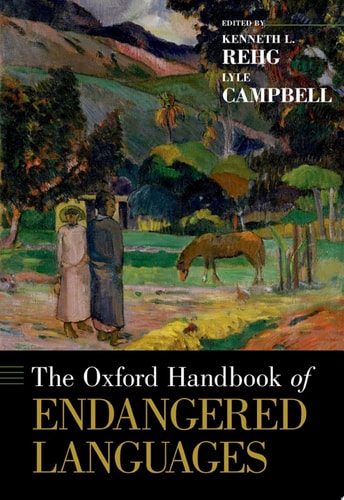
The Oxford Handbook of Endangered Languages
0
0
As an Amazon Associate and affiliate partner, Menrva Books earns from qualifying purchases. Learn more
Author Description
The endangered languages crisis is widely acknowledged among scholars who deal with languages and indigenous peoples as one of the most pressing problems facing humanity, posing moral, practical, and scientific issues of enormous proportions. Simply put, no area of the world is immune from language endangerment.The Oxford Handbook of Endangered Languages, in 39 chapters, provides a comprehensive overview of the efforts that are being undertaken to deal with this crisis. A comprehensive reference reflecting the breadth of the field, the Handbook presents in detail both the range of thinking about language endangerment and the variety of responses to it, and broadens understanding of language endangerment, language documentation, and language revitalization, encouraging further research.The Handbook is organized into five parts. Part 1, Endangered Languages, addresses the fundamental issues that are essential to understanding the nature of the endangered languages crisis. Part 2, Language Documentation, provides an overview of the issues and activities of concern to linguists and others in their efforts to record and document endangered languages. Part 3, Language Revitalization, includes approaches, practices, and strategies for revitalizing endangered and sleeping ("dormant") languages. Part 4, Endangered Languages and Biocultural Diversity, extends the discussion of language endangerment beyond its conventional boundaries to consider the interrelationship of language, culture, and environment, and the common forces that now threaten the sustainability of their diversity. Part 5, Looking to the Future, addresses a variety of topics that are certain to be of consequence in future efforts to document and revitalize endangered languages.
Menrva's Summary
THE THESIS
This volume investigates the global crisis of language endangerment by synthesizing the moral, scientific, and practical challenges inherent in the loss of linguistic diversity. Editors Kenneth L. Rehg and Lyle Campbell, both established scholars in the field of linguistics, curate a collection of 39 chapters that examine the mechanisms of language decline and the methodologies currently employed to document and revitalize threatened tongues. The text serves as a comprehensive framework for understanding how language, culture, and environment intersect in the face of modern sustainability threats.
THE SCOPE MAP
What You Will Find
- A five-part structural analysis covering fundamental issues, documentation techniques, and revitalization strategies.
- Theoretical discussions on the relationship between biocultural diversity and linguistic sustainability.
- Explorations of future-oriented research trajectories for dormant and endangered languages.
Scope Limits
- The text focuses primarily on academic and professional methodologies rather than providing a comprehensive dictionary or grammar for specific individual languages.
THE AUTHORITY PERSPECTIVE
Scholars and students of linguistics frequently cite this work as a foundational reference for understanding the breadth of the endangered languages field. Experts highlight the text's academic density and its utility as a primary resource for those involved in language documentation and policy advocacy.
Page Count:
974
Publication Date:
2018-01-01
Publisher:
Oxford University Press
ISBN-10:
0190877049
ISBN-13:
9780190877040
Cultural Anthropology
Reference
Linguistics
Anthropology
English & College Success
English
Language Arts
Academic
Community Tags
Other Editions(2)
Similar Books