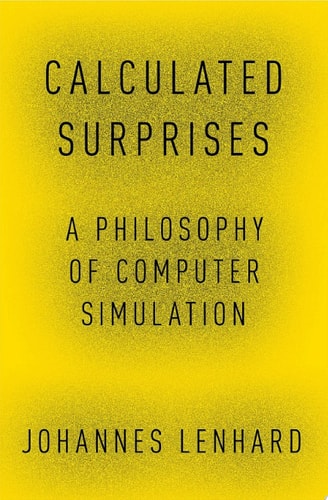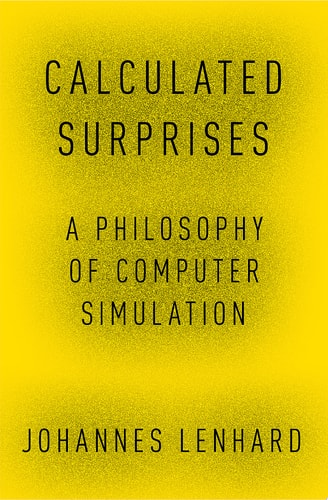
Calculated Surprises
0
0
As an Amazon Associate and affiliate partner, Menrva Books earns from qualifying purchases. Learn more
Author Description
If All Philosophy Starts With Wondering, Then Calculated Surprises Starts With Wondering About How Computers Are Changing The Face And Inner Workings Of Science. In This Book, Lenhard Concentrates On The Ways In Which Computers And Simulation Are Transforming The Established Conception Of Mathematical Modeling. His Core Thesis Is That Simulation Modeling Constitutes A New Mode Of Mathematical Modeling That Rearranges And Inverts Key Features Of The Established Conception. Although Most Of These New Key Features--such As Experimentation, Exploration, Or Epistemic Opacity--have Their Precursors, The New Ways In Which They Are Being Combined Is Generating A Distinctive Style Of Scientific Reasoning. Lenhard Also Documents How Simulation Is Affecting Fundamental Concepts Of Solution, Understanding, And Validation. He Feeds These Transformations Back Into Philosophy Of Science, Thereby Opening Up New Perspectives On Longstanding Oppositions. By Combining Historical Investigations With Practical Aspects, Calculated Surprises Is Accessible For A Broad Audience Of Readers. Numerous Case Studies Covering A Wide Range Of Simulation Techniques Are Balanced With Broad Reflections On Science And Technology. Initially, What Computers Are Good At Is Calculating With A Speed And Accuracy Far Beyond Human Capabilities. Lenhard Goes Further And Investigates The Emerging Characteristics Of Computer-based Modeling, Showing How This Simple Observation Is Creating A Number Of Surprising Challenges For The Methodology And Epistemology Of Science. These Calculated Surprises Will Attract Both Philosophers And Scientific Practitioners Who Are Interested In Reflecting On Recent Developments In Science And Technology.
Menrva's Summary
THE THESIS
This book investigates how computer-based simulation is fundamentally transforming the established conception and practice of mathematical modeling in science. Johannes Lenhard, a scholar in the philosophy of science, examines the shift from traditional analytical modeling to simulation-based reasoning. He argues that simulation introduces a new mode of scientific inquiry that inverts classical expectations regarding validation, understanding, and the nature of solutions. By integrating historical analysis with contemporary technical practices, Lenhard provides a framework for understanding how computational speed and opacity redefine scientific epistemology.
THE SCOPE MAP
What You Will Find
- Analysis of simulation techniques including experimentation, exploration, and epistemic opacity.
- A philosophical re-evaluation of concepts like solution, understanding, and validation.
- Historical investigations paired with modern computational case studies.
Scope Limits
- The text does not provide a technical manual for programming or specific software implementation.
- It does not cover the entirety of computer science, focusing specifically on the intersection of simulation and scientific methodology.
THE AUTHORITY PERSPECTIVE
Experts and philosophers of science recognize this work as a significant contribution to the study of computational epistemology. Readers frequently note that while the text addresses complex methodological challenges, it remains accessible to both scientific practitioners and those interested in the philosophy of technology.
Page Count:
256
Publication Date:
2019-01-01
Publisher:
Oxford University Press
ISBN-10:
0190873299
ISBN-13:
9780190873295
Technology Studies
Computer Science
Philosophy of
Epistemology
Community Tags
Similar Books