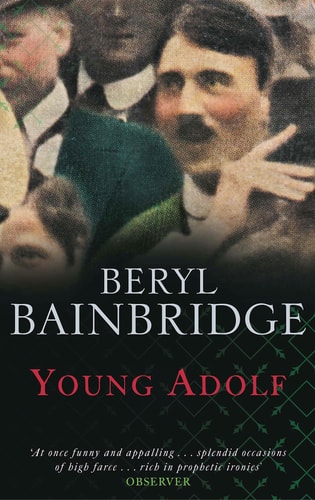
Young Adolf
0
0
As an Amazon Associate and affiliate partner, Menrva Books earns from qualifying purchases. Learn more
Author Description
In this hilarious and ingenious novel set in 1912, Young Adolf Hitler, age twenty-three, comes to Liverpool, penniless, traveling with false papers, and perpetually stalked by imaginary enemies. His half-brother, Alois, who works as a hotel waiter and a salesman, has convinced him to assist in building a commercial empire based on the newly invented safety razor. Adolf moves in with Alois, his Irish wife, and their infant son and promptly inconveniences them: He is difficult, depressed, lies for days on the sofa, bungles the simplest jobs, and has not yet found himself. In episodes of disarming comedy, at every turn young Adolf becomes involved in ludicrous and embarrassing situations, so much so that he would never, for the rest of his life, mention his laughably awkward visit to England. Taking on one of history's odder incidents with her considerable imagination and wicked sense of humor, Beryl Bainbridge makes Adolf Hitler as absurd a figure in words as Charlie Chaplin made him on film.
Menrva's Summary
THE PULSE
In 1912, a young, aimless Adolf Hitler arrives in Liverpool to stay with his half-brother, setting off a series of domestic and social disasters. Adolf struggles to integrate into his brother Alois's household, hampered by his own profound laziness, social ineptitude, and a penchant for paranoid delusions. The narrative follows his failed attempts at employment and his inability to navigate the mundane realities of English life, all while his brother attempts to launch a business venture. The story utilizes a third-person perspective to highlight the stark contrast between the historical figure's later notoriety and his pathetic, bumbling reality during this brief, obscure period of his life.
INSIDE THE PAGES
- Satirical treatment of a historical figure
- Domestic comedy centered on family friction
- Detailed period setting of early 20th-century Liverpool
- Exploration of the protagonist's early psychological instability
- Use of irony to deflate the gravity of the subject
- Episodic narrative structure
- Focus on the mundane and the embarrassing
- Character-driven humor
THE COLLECTIVE ECHO
This novel is widely regarded as a bold exercise in historical subversion that uses dark humor to strip away the mythos surrounding its subject. Critics often highlight the author's ability to render a terrifying historical figure as a mundane, irritating, and ultimately absurd presence within a domestic setting. The narrative style is noted for its dry wit and its refusal to grant the protagonist any sense of grandeur or menace. Readers generally appreciate the ingenuity of the premise, which effectively transforms a historical footnote into a sharp commentary on the banality of evil.
Page Count:
192
Publication Date:
1978-01-01
Publisher:
Fontana Paperbacks
ISBN-10:
0006541259
ISBN-13:
9780006541257
Historical Fiction
Satire
Fiction
Biographical fiction
Comedy