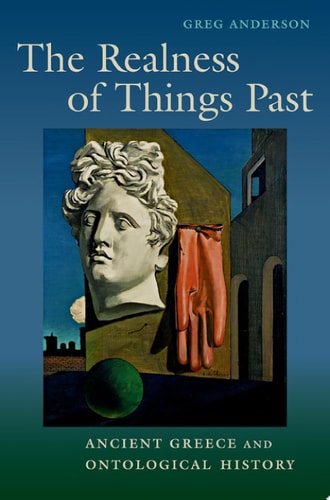
The Realness of Things Past
0
0
As an Amazon Associate and affiliate partner, Menrva Books earns from qualifying purchases. Learn more
Author Description
The Realness Of Things Past Proposes A New Paradigm Of Historical Practice. It Questions The Way We Conventionally Historicize The Experiences Of Non-modern Peoples, Western And Non-western, And Makes The Case For An Alternative. It Shows How Our Standard Analytical Devices Impose Modern, Dualist Metaphysical Conditions Upon All Non-modern Realities, Thereby Authorizing Us To Align Those Realities With Our Own Modern Ontological Commitments, Fundamentally Altering Their Contents In The Process. The Net Result Is A Practice That Homogenizes The Past's Many Different Ways Of Being Human. To Produce Histories That Are More Ethically Defensible, More Philosophically Robust, And More Historically Meaningful, We Need To Take An Ontological Turn In Our Practice. The Book Works To Formulate A Non-dualist Historicism That Will Allow Readers To Analyse Each Past Reality On Its Own Ontological Terms, As A More Or Less Autonomous World Unto Itself. To Make The Case For This Alternative Paradigm, The Book Engages With Currents Of Thought In Many Different Intellectual Provinces, From Anthropology And Postcolonial Studies To The Sociology Of Science And Quantum Physics. And To Demonstrate How The New Paradigm Might Work In Practice, It Uses Classical Athens As Its Primary Case Study. The Realness Of Things Past Is Divided Into Three Parts. To Highlight The Limitations Of Conventional Historicist Analysis And The Need For An Alternative, Part I Critically Scrutinizes Our Standard Modern Accounts Of Democratic Athens. Part Ii Draws On A Wide Range Of Historical, Ethnographic, And Theoretical Literatures To Frame Ethical And Philosophical Mandates For The Proposed Ontological Turn. To Illustrate The Historical Benefits Of This Alternative Paradigm, Part Iii Then Shows How It Allows Us To Produce An Entirely New And More Meaningful Account Of The Athenian Politeia Or Way Of Life. The Book Is Expressly Written To Be Accessible To A Non-specialist, Cross-disciplinary Readership.
Menrva's Summary
THE THESIS
This book investigates the limitations of conventional historicist methods and proposes a non-dualist ontological paradigm for analyzing the realities of non-modern peoples. Greg M. Anderson, a scholar of ancient history, challenges the tendency to impose modern, dualist metaphysical frameworks onto past societies. By arguing that current practices homogenize human experience, he advocates for an approach that respects the autonomous ontological terms of historical cultures, using classical Athens as a primary case study to demonstrate this shift in methodology.
THE SCOPE MAP
What You Will Find
- A critique of standard modern historiography regarding democratic Athens.
- A theoretical framework for non-dualist historicism.
- Interdisciplinary synthesis drawing from anthropology, postcolonial studies, sociology of science, and quantum physics.
- A practical application of the proposed paradigm to the Athenian politeia.
Scope Limits
- The book does not provide a comprehensive history of all non-modern societies.
- It does not offer a traditional chronological narrative of Athenian political events.
THE AUTHORITY PERSPECTIVE
Scholars and readers often note the ambitious interdisciplinary scope of the text, which bridges the gap between abstract philosophical inquiry and practical historical application. Experts frequently highlight this work as a significant contribution to contemporary debates regarding the ethics and methodology of historical research.
Page Count:
288
Publication Date:
2018-01-01
Publisher:
Oxford University Press
ISBN-10:
019088665X
ISBN-13:
9780190886653
Philosophy
History
Anthropology
Ontology
Historiography
Community Tags
Similar Books