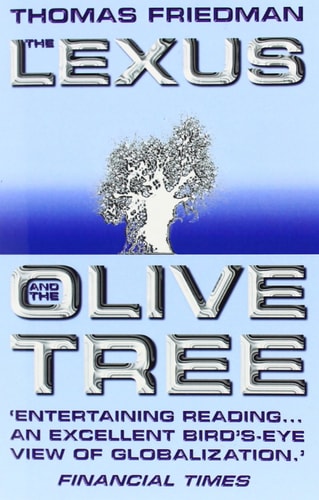
The Lexus and the Olive Tree
0
0
As an Amazon Associate and affiliate partner, Menrva Books earns from qualifying purchases. Learn more
Author Description
A powerful and accessible account of globalization -- the new world order that has replaced the cold war -- by the award-winning author of From Beirut to Jerusalem. More than anything else, globalization is shaping world affairs today. We cannot interpret the day's news, or know where to invest our money, unless we understand this new system -- the defining force in international relations and domestic policies worldwide. The unprecedented integration of finance, markets, nation states and technology is driving change accross the globe at an ever-increasing speed. And while much of the world is intent on building a better Lexus, on streamlining their societies and economies for the global marketplace, many people feel their traditional identities threatened and are reverting to elemental struggles over who owns which olive tree, which strip of land. Thomas Friedman has a unique vantage point on this worldwide phenomenon. The New York Times foreign affairs columnist has travelled the globe, interviewing everyone from Brazilian peasants to new entrepreneurs in Indonesia, to Islamic students, to the financial wizards on Wall Street and in Silicon Valley, to find out what globalization means for them, and for all of us. This ground-breaking book is essential reading for anyone who wants to know how the world really works today.
Menrva's Summary
THE THESIS
How does the unprecedented integration of global finance, technology, and markets fundamentally reshape the tension between modern economic advancement and the preservation of traditional cultural identity? Thomas Friedman, a veteran foreign affairs columnist, synthesizes years of international reporting and interviews with diverse stakeholders—from Silicon Valley executives to rural laborers—to argue that globalization is the primary system defining the post-Cold War era. He posits that nations must balance the pursuit of economic efficiency, represented by the 'Lexus,' with the deep-seated human need for cultural and territorial roots, represented by the 'olive tree.'
THE SCOPE MAP
What You Will Find
- Analysis of the integration of global markets, nation-states, and information technology.
- The 'Golden Straitjacket' framework describing the economic constraints placed on modern governments.
- Qualitative evidence gathered through extensive global travel and interviews with diverse economic actors.
- Examination of the cultural backlash against rapid modernization and the resurgence of local identity politics.
THE AUTHORITY PERSPECTIVE
This work is widely regarded as a foundational text for understanding the geopolitical and economic shifts of the late 1990s and early 2000s. Its accessible prose and clear metaphorical framework make it a standard entry point for readers seeking to grasp the complexities of the globalized world.
Page Count:
352
Publication Date:
2000-04-17
Publisher:
HarperCollins Publishers
ISBN-10:
0006551394
ISBN-13:
9780006551393
Economics
Non-Fiction
Nationalism
Economic Theory
International relations
Anthropology
Sociology
PoliticsInternational Relations
Globalization
Community Tags
Similar Books