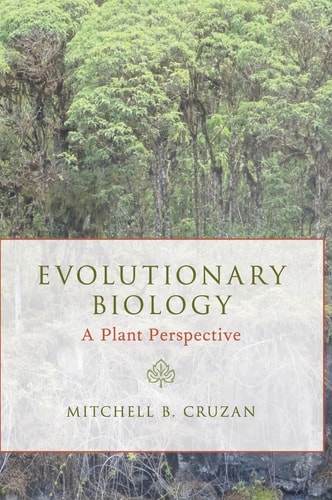
Evolutionary Biology: A Plant Perspective
0
0
As an Amazon Associate and affiliate partner, Menrva Books earns from qualifying purchases. Learn more
Author Description
Many of the characteristics that distinguish plants from other living organisms can be traced to their origin early in the history of life. Features such as a multicellular haploid life stage, prevalent hermaphroditism, self-fertilization, and general dependence on biotic and abiotic vectors for reproduction stem directly from the ability of plants to obtain energy from the sun. This novel mode of energy capture had far-ranging implications for plant evolution. It not only fueled the tremendous diversification of life on Earth, but also had far-ranging implications for the evolution of early photosynthetic organisms and eventually land plants. Understanding the evolutionary processes for the proliferation and diversification of plants requires an appreciation of their unique biological features. While the processes of mutation, selection, genetic drift, and gene flow are the same for both plants and animals, there are specific characteristics of plants that affect their evolution.Unique traits of plants affect everything from the fate of mutations, to exposure to selection in the haploid life stage, to the distribution of genetic variation within and among populations, and ultimately the rates and patterns of diversification. This book examines the origins of the unique features of plants and the implications of these features for evolutionary processes. Author Mitchell B. Cruzan provides discussion of contemporary topics such as population genetics, phylogeography, phylogenetics, ecological genetics, and genomics. The content covered is essential to a wide range of advanced courses in plant biology.
Menrva's Summary
THE THESIS
This book investigates how the unique biological characteristics of plants, such as their photosynthetic energy capture and complex life cycles, fundamentally alter the standard mechanisms of evolutionary change. Author Mitchell B. Cruzan, a specialist in plant evolutionary biology, synthesizes current research to explain how these specific traits influence mutation, selection, genetic drift, and gene flow. By bridging the gap between general evolutionary theory and plant-specific biology, the text provides a framework for understanding the diversification of photosynthetic organisms.
THE SCOPE MAP
What You Will Find
- Analysis of plant-specific evolutionary drivers like hermaphroditism and haploid life stages
- Integration of population genetics, phylogeography, and genomics
- Examination of how biotic and abiotic reproductive vectors shape genetic variation
Scope Limits
- Does not provide a general introduction to basic biology for non-scientists
- Excludes detailed coverage of non-photosynthetic organisms except for comparative purposes
THE AUTHORITY PERSPECTIVE
Experts identify this work as a rigorous resource for advanced undergraduate and graduate-level courses in plant biology. Readers frequently note the academic density of the prose, which assumes a foundational understanding of genetics and evolutionary principles.
Page Count:
552
Publication Date:
2018-10-17
Publisher:
Oxford University Press
ISBN-10:
0190882670
ISBN-13:
9780190882679
Science
Botany
Biology
Evolution
Ecology
Genetics
Plants
Evolutionary Biology
Community Tags
Similar Books