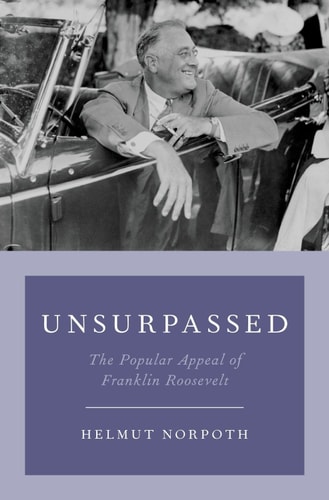
Unsurpassed: The Popular Appeal of Franklin Roosevelt
0
0
As an Amazon Associate and affiliate partner, Menrva Books earns from qualifying purchases. Learn more
Author Description
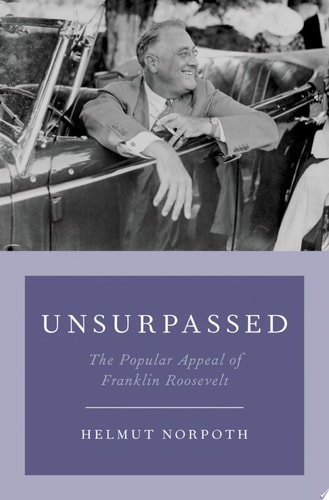
Franklin Roosevelt was not only the first US president to be covered by public opinion polls, but his ratings have consistently exceeded those of all subsequent sitting presidents, save for John F. Kennedy. Moreover, Roosevelt also stands out with a popular appeal that is unsurpassed by any of his successors serving at least a full term. The key to his approval, as this book shows, was wartime leadership, not economic performance. It began with policies preparing the nation for war in the two years before formal entry. To use FDR's own coinage, it was making the United States the "arsenal of democracy" in the battle against tyranny. That pursuit, not the New Deal, earned him high marks with the American people and re-election to an unprecedented third term. World War II--and its heavy human toll--did nothing to diminish FDR's popularity. As such, the FDR experience defies major paradigms of presidential politics. Yet, Roosevelt has been relatively ignored by scholars of public opinion. What can FDR's experience teach us and his successors about rousing broad public support, particularly during wartime? What light does his success shed on the failures of Presidents Truman, Johnson, and George W. Bush in Korea, Vietnam, and Iraq? On key issues, mainly with foreign policy, FDR had to contend with an American public that opposed his plans at the outset. Helmut Norpoth argues that Roosevelt had an unparalleled ability for leadership, especially through the fabled "fireside chats" and his appreciation of opinion polls, that enabled him to move the public to embrace his policies. In this book, Norpoth takes an in-depth look at how FDR's leadership swayed public opinion, comparing his experience to his successors to draw broad conclusions about what makes for successful presidential politics.
Menrva's Summary
THE THESIS
This book investigates the unique factors behind Franklin D. Roosevelt's consistently high public approval ratings and his ability to mobilize the American public during wartime. Helmut Norpoth, a political scientist, utilizes historical polling data and comparative analysis to challenge existing paradigms of presidential politics. He argues that FDR's success was rooted in his strategic wartime leadership and communication skills rather than his economic policies, providing a framework for understanding how leaders can shift public opinion on contentious foreign policy issues.
THE SCOPE MAP
What You Will Find
- Longitudinal analysis of presidential approval ratings from the FDR era to the present.
- Examination of the impact of the "fireside chats" on public perception.
- Comparative case studies of presidential performance in Korea, Vietnam, and Iraq.
- Quantitative assessment of the relationship between wartime policy and public support.
Scope Limits
- The analysis does not focus on the domestic economic impact of the New Deal.
- The study does not provide a comprehensive biography of Roosevelt's life outside of his political leadership.
THE AUTHORITY PERSPECTIVE
Scholars and political analysts recognize this work as a significant contribution to the study of presidential communication and public opinion. Readers frequently note the academic rigor of the prose and the clarity with which Norpoth applies historical data to modern political questions.
Page Count:
216
Publication Date:
2018-09-27
Publisher:
Oxford University Press
ISBN-10:
0190882743
ISBN-13:
9780190882747
History
Biography
Public opinion
World War
American Presidency
Community Tags
Similar Books