The War Beat, Europe: The American Media at War Against Nazi Germany
0
0
As an Amazon Associate and affiliate partner, Menrva Books earns from qualifying purchases. Learn more
Author Description
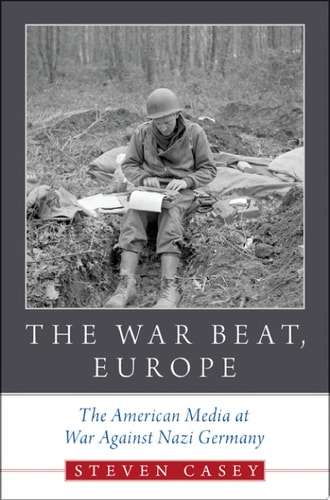
From the North African desert to the bloody stalemate in Italy, from the London blitz to the D-Day beaches, a group of highly courageous and extremely talented American journalists reported the war against Nazi Germany for a grateful audience. Based on a wealth of previously untapped primary sources, War Beat, Europe provides the first comprehensive account of what these reporters witnessed, what they were allowed to publish, and how their reports shaped the home front's perception of some of the most pivotal battles in American history.In a dramatic and fast-paced narrative, Steven Casey takes readers from the inner councils of government, where Franklin D. Roosevelt and George Marshall held clear views about how much blood and gore Americans could stomach, to the command centers in London, Algiers, Naples, and Paris, where many reporters were stuck with the dreary task of reporting the war by communiqué. At the heart of this book is the epic journey of reporters like Wes Gallagher and Don Whitehead of the Associated Press, Drew Middleton of the New York Times, Bill Stoneman of the Chicago Daily News, and John Thompson of the Chicago Tribune; of columnists like Ernie Pyle and Hal Boyle; and of photographers like Margaret Bourke-White and Robert Capa. These men and women risked their lives on countless occasions to get their dispatches and their images back home. In providing coverage of war in an open society, they also balanced the weighty responsibility of adhering to censorship regulations while working to sell newspapers and maintaining American support for the war.These reporters were driven by a combination of ambition, patriotism, and belief in the cause. War Beat, Europe shows how they earned their reputation as America's golden generation of journalists and wrote the first draft of World War II history for posterity.
Menrva's Summary
THE THESIS
This work investigates how American journalists navigated the complex tension between wartime censorship and the public's need for information during the conflict against Nazi Germany. Steven Casey, a professor of international history, utilizes a vast array of previously untapped primary sources, including government archives and personal dispatches, to construct a detailed analysis of the relationship between the press, military command, and the Roosevelt administration. The book argues that these reporters were not merely observers but active participants in shaping the American home front's understanding of the war's progress and moral stakes.
THE SCOPE MAP
What You Will Find
- Analysis of the operational constraints imposed by the U.S. military and the Roosevelt administration on war correspondents.
- Detailed accounts of the experiences of prominent journalists and photographers, including Ernie Pyle, Margaret Bourke-White, and Robert Capa.
- Examination of the logistical challenges of reporting from major theaters such as North Africa, Italy, and the D-Day landings.
- Discussion of the ethical and professional dilemmas faced by reporters balancing patriotism with the duty to report the realities of combat.
Scope Limits
- The text focuses primarily on the American media experience and does not provide an exhaustive history of the military campaigns themselves.
- The analysis is limited to the European theater of operations and does not cover the Pacific war.
THE AUTHORITY PERSPECTIVE
Historians and media scholars frequently cite this work as a definitive account of the symbiotic and often contentious relationship between the press and the military during World War II. Readers note that the prose is accessible yet maintains a high level of academic rigor, making it a standard reference for those interested in the history of war reporting.
Page Count:
441
Publication Date:
2017-01-01
Publisher:
Oxford University Press
ISBN-10:
0190660643
ISBN-13:
9780190660642
Biography
History
Military History
Public opinion
Mass media
Censorship
Journalism
American History
Mass Communication
Civil-military relations
World War
Media Studies
Community Tags
Similar Books