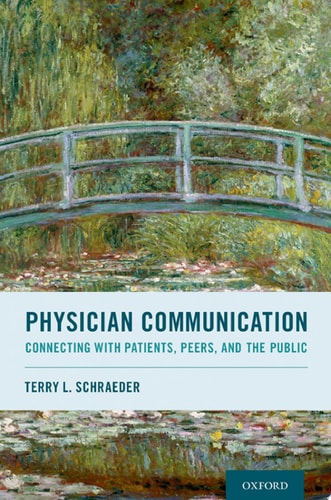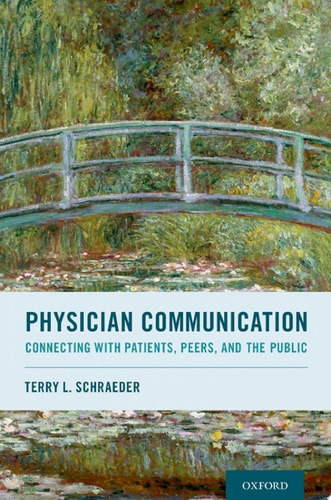
Physician Communication: Connecting with Patients, Peers, and the Public
0
0
As an Amazon Associate and affiliate partner, Menrva Books earns from qualifying purchases. Learn more
Author Description
Communication skills determine how the world perceives us - and how we perceive the world. Communication is at the heart of who we are and all that we do. As a clinician, your communication impacts how you take care of patients, work with colleagues, teach trainees, and engage audiences and the public. Communication encompasses all aspects of human skills, from listening and clearly articulating thoughts to an awareness of physical gestures, specific word choice, tone, and volume. Whether engaging with patients, peers, care teams, family members, residents, researchers, insurance agencies, management, or journalists, successful communication requires focusing on the importance of the relationship and the mission of each interaction. Today, due to the rise of digital technologies including electronic medical records, online forums, and video conferences, the content of information, the platform, and the audience are continuously changing and expanding for physicians. There is a great need in the physician community to learn how to facilitate the exchange of information, provide psychosocial support, partake in shared-decision making, translate complex information, and resolve controversies with sound science in a variety of settings. Addressing physicians at every level of training and practice, Physician Communication: Connecting with Patients, Peers, and the Public will enable providers to examine, analyse, and improve their skills in the art and science of communication. Divided into four sections: Face-to-face Communications; Digital Communications;Public Speaking; and Traditional Media, this book will help physicians navigate various situations using different methods and modes of communication.
Menrva's Summary
THE THESIS
This book investigates the critical role of effective communication in modern medical practice, arguing that interpersonal and digital proficiency is as essential to clinical success as technical medical knowledge. Terry L. Schraeder, drawing on extensive clinical experience, presents a comprehensive framework for physicians to navigate the evolving landscape of healthcare interactions. The text argues that by mastering verbal, non-verbal, and digital communication, clinicians can improve patient outcomes, enhance team collaboration, and effectively manage public engagement in an era of rapid technological change.
THE SCOPE MAP
What You Will Find
- Strategies for face-to-face patient interactions and shared decision-making.
- Guidelines for navigating digital platforms, including electronic medical records and video conferencing.
- Techniques for public speaking and engaging with traditional media outlets.
- Frameworks for resolving professional controversies and translating complex medical data for diverse audiences.
Scope Limits
- The text does not provide clinical diagnostic protocols or specific medical treatment guidelines.
- It does not cover the technical software engineering aspects of electronic medical record systems.
THE AUTHORITY PERSPECTIVE
Experts identify this work as a practical resource for clinicians seeking to bridge the gap between technical expertise and interpersonal effectiveness. Readers frequently note the accessibility of the prose, which balances academic rigor with actionable advice for physicians at all stages of their careers.
Page Count:
240
Publication Date:
2019-01-01
Publisher:
Oxford University Press
ISBN-10:
0190882468
ISBN-13:
9780190882464
Professional Development
Health Care
Physician & Patient
Allied Health
Medical
Communication
Physician Education