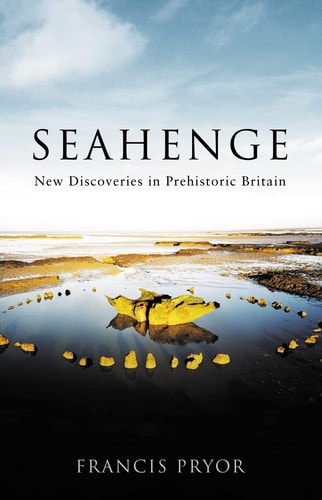
Seahenge: New Discoveries in Prehistoric Britain
0
0
As an Amazon Associate and affiliate partner, Menrva Books earns from qualifying purchases. Learn more
Author Description
An investigation into the lives of our prehistoric ancestors, focusing on the revolution in Bronze Age archaeology which has been taking place since the 1980s, and in which the author has played a central role. One of the most haunting and enigmatic archaeological discoveries of recent times was the uncovering in 1998 at low tide of the so-called Seahenge on the north coast of Norfolk. This circle of wooden planks set vertically in the sand, with a large inverted tree-trunk in the middle, likened to a ghostly "hand reaching up from the underworld", has now been dated to around 2020 BC. It focused national attention on archaeology to an extent not seen for many years, and the issues raised by its removal and preservation made it a "cause celebre". Francis Pryor has been at the centre of British archaeological fieldwork for nearly 30 years, piecing together the way of life of Bronze Age people, their settlement of the landscape, their religion and rituals. The famous wetland sites of the East Anglian Fens have preserved ten times the information of their dryland counterparts like Stonehenge and Avebury, in the form of pollen, leaves, wood, hair, skin and fibre found "pickled" in mud and peat. "Seahenge" demonstrates how much Western civilization owes to the prehistoric societies that existed in Europe in the last four millennia BC.
Menrva's Summary
THE THESIS
How did the discovery of the enigmatic Seahenge site fundamentally alter our understanding of Bronze Age social, ritual, and environmental history in Britain? Francis Pryor, a veteran archaeologist with decades of fieldwork experience in the East Anglian Fens, synthesizes his professional expertise with the specific data recovered from the 1998 excavation of the Norfolk timber circle. He argues that wetland preservation provides a superior, more detailed record of prehistoric life than traditional dryland sites, positioning these ancient societies as sophisticated contributors to the foundations of Western civilization.
THE SCOPE MAP
What You Will Find
- Detailed analysis of the 1998 Seahenge excavation and its subsequent preservation controversy.
- Comparative study between wetland archaeological sites and dryland monuments like Stonehenge.
- Examination of organic material preservation, including pollen, wood, and fiber, within peat and mud environments.
- Insights into Bronze Age settlement patterns, religious rituals, and landscape management.
THE AUTHORITY PERSPECTIVE
The text provides a dense, expert-led examination of British prehistory that bridges the gap between academic fieldwork and public interest. It serves as a foundational resource for readers seeking to understand the methodological shift toward wetland archaeology and the cultural significance of the Bronze Age in the British Isles.
Page Count:
348
Publication Date:
2001-01-01
Publisher:
Harpercollins
ISBN-10:
0007101910
ISBN-13:
9780007101917
History
Archaeology
Bronze Age
Great Britain
Anthropology
Community Tags
Similar Books














