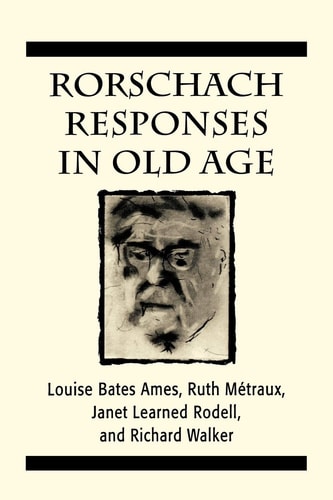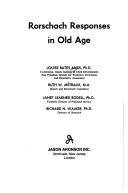
Rorschach Responses in Old Age
0
0
As an Amazon Associate and affiliate partner, Menrva Books earns from qualifying purchases. Learn more
Author Description
Today, clinicians understand that individuals' behavior reflects the biological state of their organism. To give optimal support and help to elderly people, we must recognize their developmental state as resulting in part from the biological aging process. The Rorschach test offers a remarkable tool for assessing this developmental status - for seeing which, among a group of old people of similar age, are still mentally robust, which show the beginning signs of slowing down, and which are no longer able to function independently. This Rorschach is particularly useful for evaluation in the middle range of this sequence, when the individual has become less capable but when verbalism may mask the extent of the disability. The authors present here one of the most extensive Rorschach studies to date of people between the ages of 70 and 100. They establish a gradient of responses in older subjects from normal adult performance, through a presenile level, to senility. The material is presented in concrete fashion, with specific "signs" as well as typical scores of presenility and senility, and with many complete records typical of each level of performance. Rorschach Responses in Old Age provides thorough data and guidance on using this test to assess the developmental stage as well as the psychological well-being of elderly patients.
Menrva's Summary
THE THESIS
The Rorschach test provides a critical tool for assessing the developmental and psychological well-being of elderly individuals. This book presents an extensive study of Rorschach responses in people aged 70 to 100, establishing a gradient from normal adult performance to presenility and senility. The authors detail specific
THE SCOPE MAP
- An extensive Rorschach study of individuals between the ages of 70 and 100.
- A gradient of Rorschach responses establishing levels from normal adult performance to presenility and senility.
- Specific "signs" and typical scores indicative of presenility and senility.
- Numerous complete Rorschach records representative of each performance level.
- Guidance on using the Rorschach test to assess the developmental stage of elderly patients.
- Data for evaluating the psychological well-being of older individuals.
THE AUTHORITY PERSPECTIVE
This work offers a comprehensive dataset and methodology for understanding cognitive and psychological changes in old age through Rorschach testing. The authors' detailed approach, including specific scoring signs and complete case records, aims to provide clinicians with a robust framework for evaluation. The book is positioned as a key resource for assessing the nuanced stages of cognitive decline and psychological status in the elderly population. Its focus on the middle range of decline, where subtle changes can be masked, highlights its clinical utility.
Page Count:
219
Publication Date:
1995-01-01
ISBN-10:
1568214901
Psychology
Non-Fiction
Assessment
Gerontology