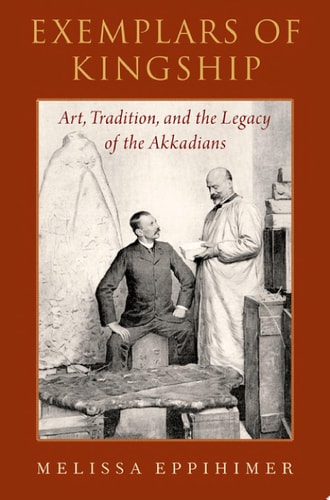
Exemplars of Kingship: Art, Tradition, and the Legacy of the Akkadians
0
0
As an Amazon Associate and affiliate partner, Menrva Books earns from qualifying purchases. Learn more
Author Description
Stretching across the historical region of Mesopotamia, the Akkadian dynasty (ca. 2334-2154 BCE) created a territorial state of unprecedented scale in the ancient Near East by uniting the city-states of Sumer and Akkad and parts of Syria and Iran. To establish and, later, cement their authority over disparate peoples and places, the kings used art and visual culture to extraordinary effect. Exemplars of Kingship conveys the astonishing life of the art of the Akkadian kings by assessing ancient and modern responses to its dynamic forms and transformative ideologies of kingship. For nearly two thousand years after their reign, the Akkadian kings were remembered as exemplary rulers. Modern assessments of ancient memories of Akkadian kingship have concentrated on textual attestations of the kings' place in cultural memory. This book considers the contributions of images to memories of Akkadian kingship. Through close readings of the visuals that remain, Melissa Eppihimer discusses how Akkadian steles, statues, and cylinder seals became models for later rulers in Mesopotamia and beyond who wished to emulate or critique the Akkadian kings-and how these rulers and their contemporaries were reminded of the Akkadian past when they looked at images. Exemplars of Kingship is, therefore, a book about Akkadian art and its reception in antiquity, but it is also concerned with the modern reception of Akkadian art and kingship. It argues that modern responses have constrained our understanding of ancient responses. Through a wide range of examples drawn from almost two millennia, the book highlights the individual decisions that prompted continuity and change during the long history of Mesopotamia and its artistic traditions.
Menrva's Summary
THE THESIS
How did the visual culture of the Akkadian dynasty shape the perception and practice of kingship in Mesopotamia for nearly two millennia? Melissa Eppihimer, an expert in ancient Near Eastern art, examines the intersection of political authority and artistic production. She argues that Akkadian steles, statues, and cylinder seals functioned as enduring models of power, influencing subsequent rulers who sought to either emulate or critique the Akkadian legacy. By shifting the focus from textual records to visual evidence, the author demonstrates how images served as active agents in the construction of historical memory.
THE SCOPE MAP
What You Will Find
- Analysis of Akkadian artistic mediums including steles, statuary, and cylinder seals.
- Examination of the reception of Akkadian visual culture from the third millennium BCE through later Mesopotamian history.
- Critique of modern scholarly interpretations that have historically limited the understanding of ancient responses to these artifacts.
Scope Limits
- The study focuses primarily on the visual and ideological legacy of the Akkadian kings rather than a comprehensive political history of the dynasty.
- It does not provide an exhaustive catalog of every extant Akkadian artifact, but rather selects key examples to illustrate the argument.
THE AUTHORITY PERSPECTIVE
Scholars in the field of Near Eastern studies recognize this work as a significant contribution to the study of ancient political iconography and cultural memory. Readers frequently note the author's ability to bridge the gap between archaeological evidence and the long-term reception of artistic traditions in the ancient world.
Page Count:
319
Publication Date:
2019-01-01
Publisher:
Oxford University Press
ISBN-10:
0190903031
ISBN-13:
9780190903039
History
Ancient History
Humanities
Near East
Mesopotamia
Art Asian
Archaeology
Art History
Community Tags
Similar Books