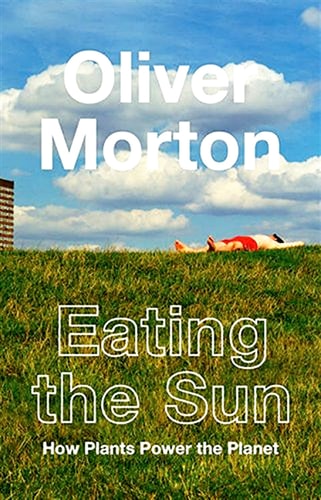
Eating the Sun: How Plants Power the Planet
0
0
As an Amazon Associate and affiliate partner, Menrva Books earns from qualifying purchases. Learn more
Author Description
A story of a world in crisis and the importance of plants, the history of the earth, and the feuds and fantasies of warring scientists — this is not your fourth-grade science class's take on photosynthesis.From acclaimed science journalist Oliver Morton comes this fascinating, lively, profound look at photosynthesis, nature's greatest miracle. Wherever there is greenery, photosynthesis is working to make oxygen, release energy, and create living matter from the raw material of sunlight, water, and carbon dioxide. Without photosynthesis, there would be an empty world, an empty sky, and a sun that does nothing more than warm the rocks and reflect off the sea. With photosynthesis, we have a living world with three billion years of sunlight-fed history to relish.Eating the Sun is a bottom-up account of our planet, a celebration of how the smallest things, enzymes and pigments, influence the largest things—the oceans, the rainforests, and the fossil fuel economy. From the physics, chemistry, and cellular biology that make photosynthesis possible, to the quirky and competitive scientists who first discovered the beautifully honed mechanisms of photosynthesis, to the modern energy crisis we face today, Oliver Morton offers a complete biography of the earth through the lens of this mundane and most important of processes. More than this, Eating the Sun is a call to arms. Only by understanding photosynthesis and the flows of energy it causes can we hope to understand the depth and subtlety of the current crisis in the planet's climate. What's more, nature's greatest energy technology may yet inspire the breakthroughs we need to flourish without such climatic chaos in the century to come.Entertaining, thought-provoking, and deeply illuminating, Eating the Sun reveals that photosynthesis is not only the key to humanity's history; it is also vital to confronting and understanding contemporary realities like climate change and the global food shortage. This book will give you a
Menrva's Summary
THE THESIS
How does the fundamental biological process of photosynthesis shape the history of Earth and dictate the future of our climate? Oliver Morton, an experienced science journalist, synthesizes complex cellular biology, geological history, and the competitive history of scientific discovery to argue that photosynthesis is the primary engine of planetary life. He posits that understanding this energy-conversion process is essential for addressing contemporary challenges like the energy crisis and climate change.
THE SCOPE MAP
What You Will Find
- The chemical and physical mechanisms of photosynthesis, from enzymes to pigments.
- A historical account of the scientists who uncovered the secrets of light-harvesting.
- An analysis of how photosynthesis influences global systems, including oceans and rainforests.
- A discussion on the role of solar energy in the fossil fuel economy and future sustainable technologies.
THE AUTHORITY PERSPECTIVE
The text provides a comprehensive and accessible synthesis of botanical science and planetary history, suitable for readers interested in the intersection of biology and climate policy. Its framing suggests a rigorous yet engaging examination of how microscopic processes dictate the macro-scale health of the planet.
Page Count:
384
Publication Date:
2007-01-01
Publisher:
Fourth Estate
ISBN-10:
000717179X
ISBN-13:
9780007171798
Nature
Science
Ecology
Plants
Science & Math
Climate Change
Biology
Environment
Botany
Community Tags
Similar Books