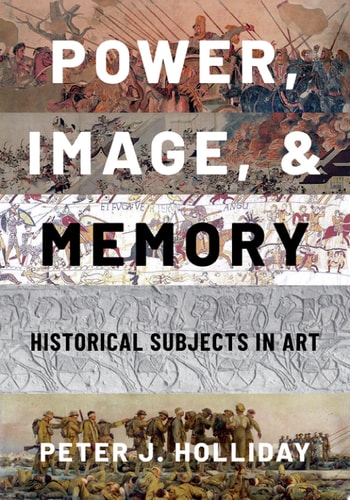
Power, Image, and Memory: Historical Subjects in Art
0
0
As an Amazon Associate and affiliate partner, Menrva Books earns from qualifying purchases. Learn more
Author Description
Those who write history determine its narrative, whether through written text or through the visual language of art and public monuments. Power, Image, and Memory examines a wide variety of artistic traditions, showing how art commemorating historical events can shape collective memory, and with it, the identities of social groups and nations.From the Mesopotamians to the present day, leaders and societies have used art to frame and memorialize important events. This account establishes a dialogue among traditions in a series of case studies, ranging from the reliefs at Ramses' temple at Abu Simbel and the ancient Greek "Alexander Mosaic" to the Heian Period Japanese scroll of the Night Attack on the Sanjo Palace, the Benin Bronzes, Diego Velázquez's Surrender at Breda, and Picasso's Guernica. Weaving together meticulous historic detail, theory, and visual analysis, this volume offers a complex picture of the power of art and memory, as well as of the life of these monuments and messages over time, distanced from their original cultures and context. With insights relevant to contemporary debates reexamining historic monuments, Power, Image, and Memory sheds new light on the power of art to shape social memory and identity.
Menrva's Summary
THE THESIS
This volume investigates how visual art and public monuments function as instruments of historical narrative, shaping collective memory and national identity across diverse cultures. Peter J. Holliday, an expert in art history, synthesizes historical analysis with visual theory to demonstrate how leaders from antiquity to the modern era have utilized artistic representation to frame significant events. By examining the life of these monuments beyond their original contexts, the author argues that art serves as a persistent, evolving force in the construction of social identity.
THE SCOPE MAP
What You Will Find
- Comparative analysis of artistic traditions from Mesopotamia to the contemporary era.
- Case studies including the Alexander Mosaic, Benin Bronzes, and Picasso's Guernica.
- Theoretical frameworks regarding the intersection of visual culture, power, and historical memory.
Scope Limits
- The text does not provide an exhaustive global history of art, focusing instead on specific monuments that illustrate the intersection of power and memory.
- It does not offer a comprehensive guide to contemporary monument removal debates, though it provides historical context for them.
THE AUTHORITY PERSPECTIVE
Scholars and students of art history frequently cite this work for its interdisciplinary approach to visual culture and political history. Experts highlight the text as a valuable resource for understanding how monuments maintain relevance long after their original cultural contexts have shifted.
Page Count:
288
Publication Date:
2024-01-01
Publisher:
Oxford University Press
ISBN-10:
019090108X
ISBN-13:
9780190901080
History
Visual Culture
Art History
Pop Culture
Community Tags
Similar Books