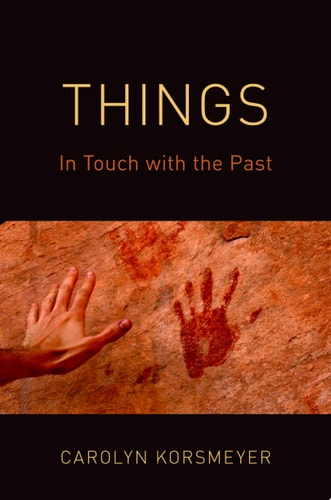
Things: In Touch With the Past
0
0
As an Amazon Associate and affiliate partner, Menrva Books earns from qualifying purchases. Learn more
Author Description
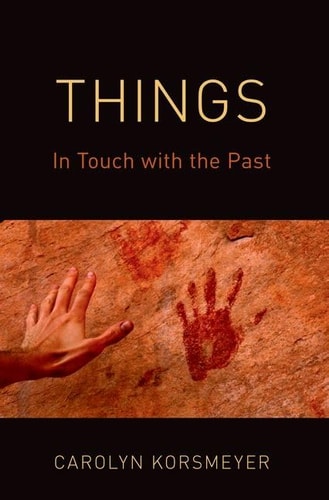
Things: In Touch With The Past explores the value of artifacts that have survived from the past and that can be said to embody their histories. Such genuine or real things afford a particular kind of aesthetic experience-an encounter with the past-despite the fact that genuineness is not a perceptually detectable property. Although it often goes unnoticed, the sense of touch underlies such encounters, even though one is often not permitted literal touch. Carolyn Korsmeyer begins her account with the claim that wonder or marvel at old things fits within an experiential account of the aesthetic. She then presents her main argument regarding the role of touch-both when literal contact is made and when proximity suffices, for touch is a fundamental sense that registers bodily position and location. Correct understanding of the identity of objects is presumed when one values things just because of what they are, and with discovery that a mistake has been made, admiration is often withdrawn. Far from undermining the importance of the genuine, these errors of identification confirm it. Korsmeyer elaborates this position with a comparison between valuing artifacts and valuing persons. She also considers the ethical issues of genuineness, for artifacts can be harmed in various ways ranging from vandalism to botched restoration. She examines the differences between a real thing and a replica in detail, making it clear that genuineness comes in degrees. Her final chapter reviews the ontology that best suits an account of persistence over time of things that are valued for being the real thing.
Menrva's Summary
THE THESIS
What is the source of the aesthetic and ethical value we assign to genuine historical artifacts? Carolyn Korsmeyer, a professor of philosophy, utilizes an analytical framework rooted in aesthetics and phenomenology to argue that the value of an object is inextricably linked to its physical history and our sensory engagement with it. She posits that the sense of touch, whether literal or conceptual, serves as a fundamental mechanism for establishing a connection to the past.
THE SCOPE MAP
What You Will Find
- Philosophical analysis of aesthetic experience and historical authenticity
- Examination of the role of touch in perceiving object identity
- Comparison between the valuation of historical artifacts and the valuation of persons
- Ethical considerations regarding the preservation and restoration of physical objects
Scope Limits
- Does not provide a comprehensive history of specific museum collections
- Does not serve as a technical manual for physical artifact conservation or restoration techniques
THE AUTHORITY PERSPECTIVE
Scholars in the field of aesthetics recognize this work as a rigorous contribution to the philosophy of material culture. Readers frequently note the academic density of the prose, which requires a foundational understanding of ontological and aesthetic theory to fully grasp the author's arguments.
Page Count:
256
Publication Date:
2018-01-01
Publisher:
Oxford University Press
ISBN-10:
0190904887
ISBN-13:
9780190904883
Philosophy
Aesthetics
Ontology
Art History