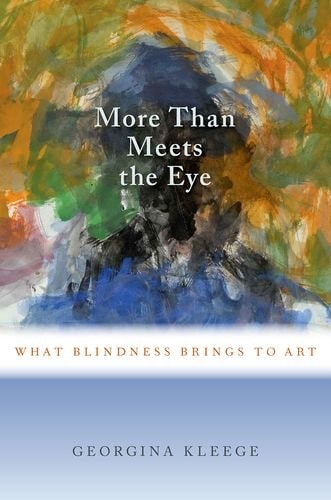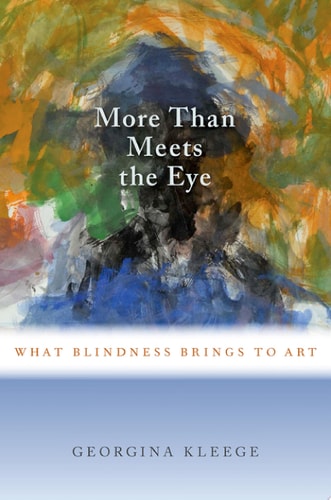
More Than Meets the Eye: What Blindness Brings to Art
0
0
As an Amazon Associate and affiliate partner, Menrva Books earns from qualifying purchases. Learn more
Author Description
In the quarter century following the enactment of the Americans with Disabilities Act, art museums, along with other public institutions, were tasked with making their facilities and collections more accessible to people with disabilities. Although blind and other disabled people have become marginally more visible in recent years, the vast majority of blind Americans remain undereducated and unemployed. In More Than Meets the Eye, Georgina Kleege shows how the scrutiny of one cultural issue-access to arts institutions-in relation to one subset of the disabled population- blind people-can lead us to larger and more general implications. Kleege begins by examining representations of blindness, arguing that traditional theories of blindness often fail to take into account the presence of other senses, or the ability of blind people to draw analogies from non-visual experience to develop concepts about visual phenomena. Following this, the book shifts its focus from the tactile to the verbal, describing Denis Diderot's remarkable range of techniques to describe art works for readers who were not able to view them. Diderot's writing not only provided a model for describing art, Kleege says, but proof that the experience of art is inextricably tied to language and thus not entirely dependent on sight. By intertwining her personal experience with scientific study and historical literary analysis, Kleege challenges traditional conceptions of blindness and overturns the assumption that the ideal art viewer must have perfect vision. More Than Meets the Eye seeks to establish a dialogue between blind people and the philosophers, scientists, and educators that study blindness, in order to create new aesthetic possibilities and a more genuinely inclusive society.
Menrva's Summary
THE THESIS
How can the inclusion of blind individuals in art institutions challenge traditional aesthetic hierarchies and redefine the nature of visual experience? Georgina Kleege, a scholar and writer who is blind, utilizes a multidisciplinary approach to investigate the intersection of disability and cultural access. By synthesizing historical literary analysis, scientific research on sensory perception, and personal narrative, she argues that the reliance on sight as the sole arbiter of artistic value is a cultural construct rather than an inherent biological necessity.
THE SCOPE MAP
What You Will Find
- Historical analysis of Denis Diderot’s descriptive techniques for art.
- Examination of the Americans with Disabilities Act and its impact on museum accessibility.
- Theoretical frameworks regarding sensory substitution and non-visual conceptualization.
- Integration of personal experience with academic discourse on blindness.
Scope Limits
- The text does not provide a comprehensive guide to museum accessibility standards or universal design engineering.
- It does not focus on the experiences of individuals with disabilities other than blindness.
THE AUTHORITY PERSPECTIVE
Scholars in disability studies and art history frequently cite this work for its ability to bridge the gap between theoretical aesthetics and practical institutional policy. Readers often note the accessible yet rigorous nature of the prose, which successfully challenges long-standing assumptions about the primacy of vision in art appreciation.
Page Count:
176
Publication Date:
2017-01-01
Publisher:
Oxford University Press
ISBN-10:
0190604387
ISBN-13:
9780190604387
Non-Fiction
Philosophy
Aesthetics
English
Art History
Humanities
Art Criticism
English & College Success