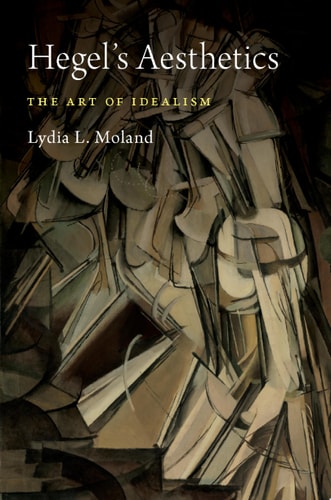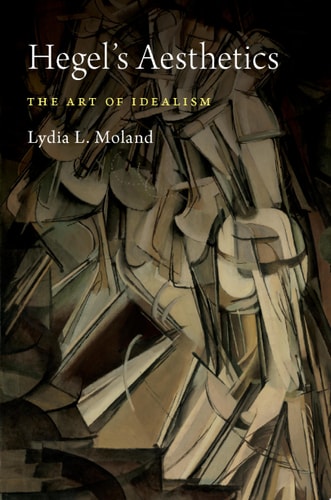
Hegel's Aesthetics: The Art of Idealism
0
0
As an Amazon Associate and affiliate partner, Menrva Books earns from qualifying purchases. Learn more
Author Description
Hegel is known as "the father of art history," yet recent scholarship has overlooked his contributions. This is the first comprehensive interpretation of Hegel's philosophy of art in English in thirty years. In a new analysis of Hegel's notorious "end of art" thesis, Hegel's Aesthetics shows the indispensability of Hegel's aesthetics for understanding his philosophical idealism and introduces a new claim about his account of aesthetic experience. In a departure from previous interpretations, Lydia Moland argues for considering Hegel's discussion of individual arts--architecture, sculpture, painting, music, and poetry--on their own terms, unlocking new insights about his theories of perception, feeling, selfhood, and freedom. This new approach allows Hegel's philosophy to engage with modern aesthetic theories and opens new possibilities for applying Hegel's aesthetics to contemporary art. Moland further elucidates his controversial analysis of symbolic, classical, and romantic art through clarifying Hegel's examples of each. By incorporating newly available sources from Hegel's lectures on art, this book widely expands our understanding of the particular artworks Hegel discusses as well as the theories he rejects. Hegel's Aesthetics further situates his arguments in the intense philosophizing about art among his contemporaries, including Kant, Lessing, Herder, Schelling, and the Schlegel brothers. Ultimately, the book offers a rich vision of the foundation of his ideas about art and the range of their application, confirming Hegel as one of the most important theorists of art in the history of philosophy.
Menrva's Summary
THE THESIS
How does Hegel's philosophy of art function as a necessary component of his broader system of idealism, and what does his 'end of art' thesis truly signify? Lydia L. Moland, a scholar of German philosophy, utilizes newly available sources from Hegel's lecture notes to re-evaluate his aesthetic framework. By moving beyond traditional interpretations, the author argues that Hegel's analysis of specific art forms—architecture, sculpture, painting, music, and poetry—provides critical insights into his theories of perception, selfhood, and freedom. The book positions Hegel's work within the context of his contemporaries, such as Kant and Schelling, to demonstrate the enduring relevance of his aesthetic theory.
THE SCOPE MAP
What You Will Find
- A comprehensive analysis of Hegel's 'end of art' thesis.
- Detailed examinations of symbolic, classical, and romantic art categories.
- Comparative studies between Hegel and contemporaries like Kant, Lessing, and Herder.
- Integration of recently recovered lecture sources on art history.
Scope Limits
- The text does not provide a general history of art, but rather a philosophical analysis of Hegel's specific aesthetic theories.
- It does not attempt to resolve all modern aesthetic debates, focusing instead on the application of Hegelian principles to contemporary discourse.
THE AUTHORITY PERSPECTIVE
Scholars recognize this work as a significant contribution to the field, noting that it fills a thirty-year gap in comprehensive English-language scholarship on the subject. Readers frequently highlight the clarity with which Moland navigates dense philosophical arguments, making it a valuable resource for both specialists in German Idealism and students of art theory.
Page Count:
351
Publication Date:
2019-01-01
Publisher:
Oxford University Press
ISBN-10:
0190847352
ISBN-13:
9780190847357
Non-Fiction
Philosophy
History & Surveys
Art History
Aesthetics
Community Tags
Similar Books