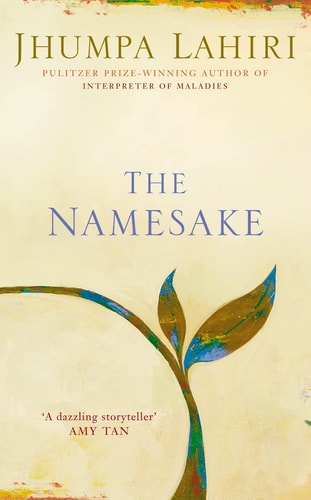
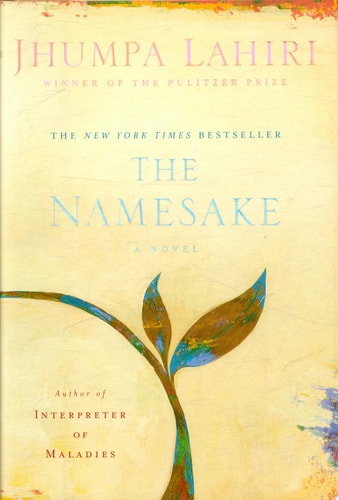
The Namesake
0
0
As an Amazon Associate and affiliate partner, Menrva Books earns from qualifying purchases. Learn more
Author Description
In The Namesake, Lahiri enriches the themes that made her first book an international bestseller: the immigrant experience, the clash of cultures, the conflicts of assimilation, and, most poignantly, the tangled ties between generations. Here again Lahiri displays her deft touch for the perfect detail—the fleeting moment, the turn of phrase—that opens whole worlds of emotion.The Namesake takes the Ganguli family from their tradition-bound life in Calcutta through their fraught transformation into Americans. On the heels of their arranged wedding, Ashoke and Ashima Ganguli settle together in Cambridge, Massachusetts. An engineer by training, Ashoke adapts far less warily than his wife, who resists all things American and pines for her family.When their son is born, the task of naming him betrays the vexed results of bringing old ways to the new world. Named for a Russian writer by his Indian parents in memory of a catastrophe years before, Gogol Ganguli knows only that he suffers the burden of his heritage as well as his odd, antic name.Lahiri brings great empathy to Gogol as he stumbles along the first-generation path, strewn with conflicting loyalties, comic detours, and wrenching love affairs. With penetrating insight, she reveals not only the defining power of the names and expectations bestowed upon us by our parents, but also the means by which we slowly, sometimes painfully, come to define ourselves.The New York Times has praised Lahiri as "a writer of uncommon elegance and poise." The Namesake is a fine-tuned, intimate, and deeply felt novel of identity.
Menrva's Summary
THE PULSE
The arrival of a son named Gogol forces a first-generation Indian-American family to confront the friction between their ancestral traditions and the realities of life in Massachusetts. Ashoke and Ashima Ganguli navigate the complexities of assimilation, balancing their deep-seated ties to Calcutta with the demands of their new American environment. Their son, Gogol, struggles to reconcile his unique, Russian-inspired name with his desire for a conventional identity. The narrative follows the family over several decades, utilizing a third-person perspective to examine the shifting loyalties and personal evolutions of each member as they attempt to define their place in the world.
INSIDE THE PAGES
- Exploration of the immigrant experience and cultural displacement
- Examination of the generational divide between parents and children
- Focus on the significance of naming conventions and personal identity
- Detailed depiction of domestic life in both Calcutta and Cambridge
- Analysis of the tension between arranged marriage traditions and American social norms
- Character-driven narrative focusing on internal growth and external pressures
- Use of specific, sensory details to ground the emotional stakes
- Non-linear progression through the life stages of the Ganguli family
THE COLLECTIVE ECHO
Critics and readers have widely recognized this novel for its precise prose and its nuanced portrayal of the immigrant experience. The work is frequently cited for its ability to capture the subtle, often painful process of self-definition within a multicultural context. Many discussions highlight the author's restraint and her capacity to render the domestic sphere with significant depth and clarity. The novel remains a staple in contemporary literature for its exploration of how names and heritage shape an individual's trajectory through life.
Page Count:
250
Publication Date:
2003-09-01
Publisher:
Houghton, Mifflin
ISBN-10:
0007173032
ISBN-13:
9780007173037
Contemporary
Literary Fiction
Massachusetts fiction
Family Saga
Literary
Literature & Fiction
Coming of Age
Subjects
Community Tags
Other Editions(9)


















Reader Comments
Share Your Thoughts
No comments yet. Be the first to share your thoughts!