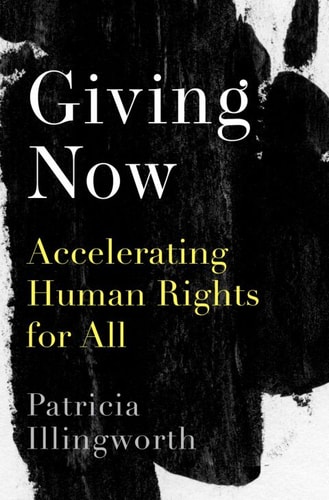
Giving Now: Accelerating Human Rights for All
0
0
As an Amazon Associate and affiliate partner, Menrva Books earns from qualifying purchases. Learn more
Author Description
Dirty dollars, tainted donors and "poverty porn" have caused a social backlash against philanthropy. As more wealth is concentrated in the hands of a rising number of billionaires, it is clear that the same system that created their wealth also perpetuates deep inequality, social injustice, and human suffering. Philanthropists often give with strings attached. They want to make the world a better place, but insist on their own vision of what constitutes a better world. Some donors also pay with tainted money, give to hate groups, or use their money to launder their reputations. Nonprofits that ignore the warning signs are often complicit in the fallout that comes with "dark dollars".Using case studies, Patricia Illingworth shows how to address this problem. She argues that approaching philanthropy through a human rights lens can improve the quality of giving, resolve urgent quandaries, and mitigate the social injustice that philanthropy can perpetuate. A philosopher and lawyer, Illingworth makes the case that people and organizations have human rights responsibilities that should guide philanthropy and the nonprofit sector. When philanthropy begins to acknowledge, respect, and protect human rights it will regain its social license and help to make the world a better place.
Menrva's Summary
THE THESIS
Can a human rights-based framework resolve the ethical contradictions inherent in modern large-scale philanthropy? Patricia M. L. Illingworth, a philosopher and lawyer, examines the systemic issues surrounding wealth concentration and the influence of private donors on social outcomes. She argues that the current model of philanthropy often perpetuates inequality and suggests that adopting a human rights lens provides a necessary ethical standard for donors and nonprofit organizations to regain social legitimacy.
THE SCOPE MAP
What You Will Find
- Analysis of the ethical implications of "dark dollars" and tainted donations.
- A proposed framework for integrating human rights responsibilities into philanthropic strategy.
- Examination of the power dynamics between wealthy donors and nonprofit recipients.
Scope Limits
- The text does not provide a comprehensive history of global charitable organizations.
- It does not offer a technical manual for tax-advantaged financial planning or wealth management.
THE AUTHORITY PERSPECTIVE
Experts identify this work as a significant contribution to the ethics of the nonprofit sector, particularly for its focus on the intersection of law and moral philosophy. Readers frequently note the academic rigor of the prose, which serves as a foundational text for those seeking to reform philanthropic practices.
Page Count:
2240
Publication Date:
2022-01-01
Publisher:
Oxford University Press
ISBN-10:
0190907061
ISBN-13:
9780190907068
Philosophy
Non-Fiction
Human rights
Philanthropy
Ethics
Social justice
Community Tags
Similar Books