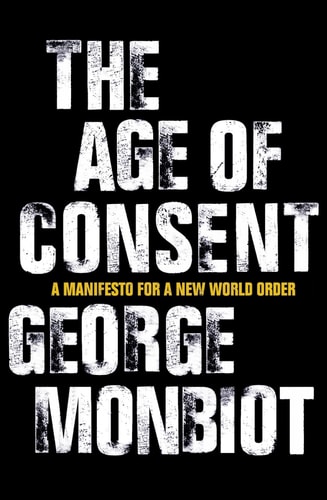
The Age of Consent: A Manifesto for a New World Order
0
0
As an Amazon Associate and affiliate partner, Menrva Books earns from qualifying purchases. Learn more
Author Description
If Naomi Klein's "No Logo" told us what was wrong, George Monbiot promises to show us how to put it right. "Our task," he says, "is not to overthrow globalisation, but to capture it, and to use it as a vehicle for humanity's first global democratic revolution." All over our planet, the rich get richer while the poor are overtaken by debt and disaster. The world is run not by its people but by a handful of unelected or underelected executives who make the decisions on which everyone else concerning war, peace, debt, development and the balance of trade. Without democracy at the global level, the rest of us are left with no means of influencing these men but to shout abuse and hurl ourselves at the lines of police defending their gatherings and decisions. Does it have to be this way? George Monbiot knows not only that things ought to change, but also that they can change. Drawing on decades of thinking about how the world is organized and administered politically, fiscally and commercially, Monbiot has developed an interlocking set of proposals all his own, which attempts nothing less than a revolution in the way the world is run. If these proposals become popular, never again will people be able to ask of the critics of the existing world order, "we know what they don't want, but what do they want?"
Menrva's Summary
THE THESIS
George Monbiot investigates how to transition from a world governed by unelected global elites to a system defined by democratic accountability and international cooperation. Drawing on his extensive background in investigative journalism and political activism, Monbiot critiques the current structures of global trade and finance. He argues that the solution lies not in rejecting globalization, but in capturing its mechanisms to establish a global democratic revolution that empowers the world's population.
THE SCOPE MAP
What You Will Find
- A detailed critique of current global governance institutions like the IMF and World Bank.
- A proposed framework for a global parliament and democratic international oversight.
- Analysis of fiscal and commercial policies that perpetuate wealth inequality.
- Strategic proposals for reforming international trade to prioritize human welfare over corporate interests.
THE AUTHORITY PERSPECTIVE
This work presents a dense, ambitious blueprint for structural reform that challenges the status quo of international political economy. The text serves as a rigorous, albeit controversial, intellectual exercise for readers interested in the mechanics of global governance and institutional change.
Page Count:
256
Publication Date:
2003-01-01
Publisher:
Flamingo / HC: HarperCollins
ISBN-10:
0007171242
ISBN-13:
9780007171248
Economics
Politics
Globalization
Democracy
Social justice
International relations
World politics
Community Tags
Similar Books