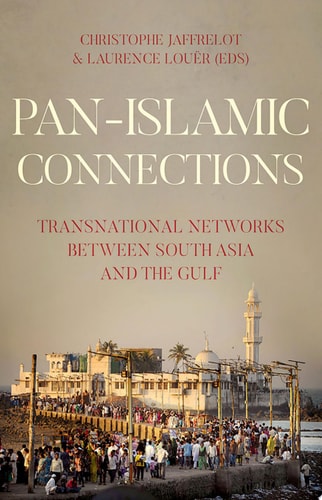
Pan-Islamic Connections
0
0
As an Amazon Associate and affiliate partner, Menrva Books earns from qualifying purchases. Learn more
Author Description
South Asia Is Today The Region Inhabited By The Largest Number Of Muslims---roughly 500 Million. In The Course Of The Islamisation Process, Which Begaun In The Eighth Century, It Developed A Distinct Indo-islamic Civilisation That Culminated In The Mughal Empire. While Paying Lip Service To The Power Centres Of Islam In The Gulf, Including Mecca And Medina, This Civilisation Has Cultivated Its Own Variety Of Islam, Based On Sufism. Over The Last Fifty Years, Pan-islamic Ties Have Intensified Between These Two Regions. Gathering Together Some Of The Best Specialists On The Subject, This Volume Explores These Ideological, Educational And Spiritual Networks, Which Have Gained Momentum Due To Political Strategies, Migration Flows And Increased Communications. At Stake Are Both The Resilience Of The Civilisation That Imbued South Asia With A Specific Identity, And The Relations Between Sunnis And Shias In A Region Where Saudi Arabia And Iran Are Fighting A Cultural Proxy War, As Evident In The Foreign Ramifications Of Sectarianism In Pakistan. Pan-islamic Connections Investigates The Nature And Implications Of The Cultural, Spiritual And Socio-economic Rapprochement Between These Two Islams.
Menrva's Summary
THE THESIS
This volume investigates the intensifying ideological, educational, and spiritual networks connecting South Asian Muslim communities with the power centers of the Gulf. Editors Christophe Jaffrelot and Laurence Louer assemble a collection of expert contributors to analyze how political strategies, migration patterns, and communication technologies have reshaped these transnational relationships. The text argues that these connections are not merely religious but are deeply influenced by the geopolitical rivalry between Saudi Arabia and Iran, which manifests as a cultural proxy war within South Asian societies.
THE SCOPE MAP
What You Will Find
- Analysis of the historical development of Indo-Islamic civilization and its Sufi foundations.
- Examination of the impact of migration flows and modern communication on religious identity.
- Case studies on the foreign ramifications of sectarianism, particularly within Pakistan.
- Discussion of the shifting dynamics between Sunni and Shia populations in the region.
Scope Limits
- The text focuses primarily on the last fifty years of interaction rather than a comprehensive history of the entire Islamic era.
- It does not provide an exhaustive theological treatise but rather focuses on the socio-political and cultural dimensions of these connections.
THE AUTHORITY PERSPECTIVE
Experts identify this volume as a significant contribution to the study of transnational religious networks and their geopolitical consequences. Readers frequently note the academic rigor of the contributors and the clarity with which the authors navigate complex sectarian tensions.
Page Count:
304
Publication Date:
2018-01-01
Publisher:
Oxford University Press
ISBN-10:
019091128X
ISBN-13:
9780190911287
Religion
History
Middle Eastern
Asian Studies
International relations
Community Tags
Similar Books