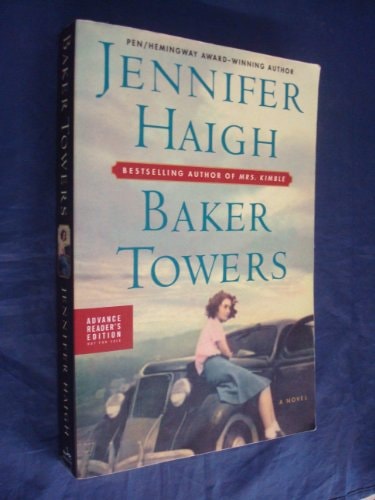
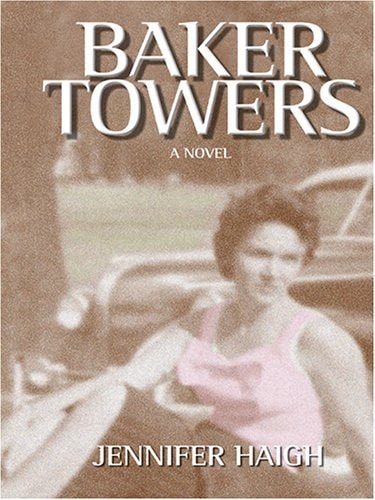
Baker Towers
0
0
As an Amazon Associate and affiliate partner, Menrva Books earns from qualifying purchases. Learn more
Author Description
E-Book Extras: ONE: An Interview with Jennifer Haigh; TWO: Reading Group Guide. A stunning follow-up to her bestselling debut, Mrs. Kimble, Jennifer Haigh returns with Baker Towers, a compelling story of love and loss in a western Pennsylvania mining town in the years after World War II. Bakerton is a company town built on coal, a town of church festivals and ethnic neighborhoods, hunters' breakfasts and firemen's parades. Its children are raised in company houses -- three rooms upstairs, three rooms downstairs. Its ball club leads the coal company league. The twelve Baker mines offer good union jobs, and the looming black piles of mine dirt don't bother anyone. Called Baker Towers, they are local landmarks, clear evidence that the mines are booming. Baker Towers mean good wages and meat on the table, two weeks' paid vacation and presents under the Christmas tree. The mines were not named for Bakerton; Bakerton was named for the mines. This is an important distinction. It explains the order of things. Born and raised on Bakerton's Polish Hill, the five Novak children come of age during wartime, a thrilling era when the world seems on the verge of changing forever. The oldest, Georgie, serves on a minesweeper in the South Pacific and glimpses life beyond Bakerton, a promising future he is determined to secure at all costs. His sister Dorothy, a fragile beauty, takes a job in Washington, D.C., and finds she is unprepared for city life. Brilliant Joyce longs to devote herself to something of consequence but instead becomes the family's keystone, bitterly aware of the opportunities she might have had elsewhere. Sandy sails through life on looks and charm, and Lucy, the volatile baby, devours the family's attention and develops a bottomless appetite for love. Baker Towers is a family saga and a love story, a hymn to a time and place long gone, to America's industrial past and the men and women we now call the Greatest Generation. This is a feat of imagination from a
Menrva's Summary
THE PULSE
The Novak family navigates the shifting social and economic landscape of a Pennsylvania coal town in the shadow of the post-World War II industrial boom. As the five Novak siblings transition into adulthood, they grapple with the rigid expectations of their company-owned environment and their own divergent desires for a life beyond the mines. The narrative follows their individual trajectories—from the Pacific theater to the streets of Washington, D.C.—while maintaining a focus on the domestic tensions and communal pressures of Bakerton. Through a multi-perspective lens, the story examines the fragility of personal ambition when pitted against the inescapable gravity of a town defined entirely by its coal production.
INSIDE THE PAGES
- Multi-generational family saga structure
- Detailed depiction of post-war industrial town life
- Character-driven narrative focusing on five distinct siblings
- Exploration of the socioeconomic impact of company towns
- Themes of migration and the search for identity beyond one's origins
- Atmospheric setting rooted in western Pennsylvania geography
- Examination of the tension between traditional values and modern aspirations
- Episodic progression tracking the Novak children from youth to maturity
THE COLLECTIVE ECHO
This work is characterized by its meticulous attention to the social fabric of mid-century industrial America. The narrative avoids sentimentality, instead opting for a grounded portrayal of the Novak family's internal and external conflicts. Readers often note the author's ability to render the claustrophobic yet communal nature of a company town with precision. The prose maintains a steady, observational rhythm that mirrors the slow, inevitable changes within the town of Bakerton itself. The story serves as a study of how economic dependency shapes the personal choices and long-term trajectories of its inhabitants.
Page Count:
512
Publication Date:
2005-04-04
Publisher:
HarperCollins
ISBN-10:
0007201583
ISBN-13:
9780007201587
Historical Fiction
Literary Fiction
Romance
Historical
Literary
Contemporary
Domestic Life
Genre Fiction
Sagas
Family Saga
Literature & Fiction
Industrial history
Coming of Age
Fiction
Women
Womens Fiction
Family life
Community Tags
Other Editions(4)


Similar Books







Reader Comments
Share Your Thoughts
No comments yet. Be the first to share your thoughts!