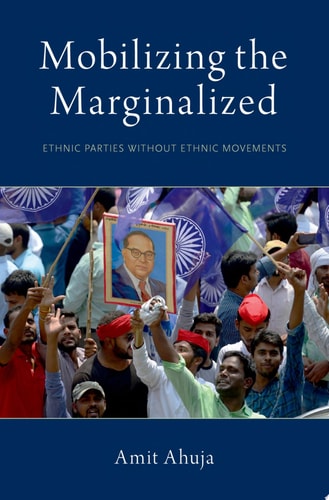
Mobilizing the Marginalized
0
0
As an Amazon Associate and affiliate partner, Menrva Books earns from qualifying purchases. Learn more
Author Description
India's Over 200 Million Dalits, Once Called Untouchables, Have Been Mobilized By Social Movements And Political Parties, But The Outcomes Of This Mobilization Are Puzzling. Dalits' Ethnic Parties Have Performed Poorly In Elections In States Where Movements Demanding Social Equality Have Been Strong While They Have Succeeded In States Where Such Movements Have Been Entirely Absent Or Weak. In Mobilizing The Marginalized, Amit Ahuja Demonstrates That The Collective Action Of Marginalized Groups--those That Are Historically Stigmatized And Disproportionately Poor Ed Is Distinct. Drawing On Extensive Original Research Conducted Across Four Of India's Largest States, He Shows, For The Marginalized, Social Mobilization Undermines The Bloc Voting Their Ethnic Parties' Rely On For Electoral Triumph And Increases Multi-ethnic Political Parties' Competition For Marginalized Votes. He Presents Evidence Showing That A Marginalized Group Gains More From Participating In A Social Movement And Dividing Support Among Parties Than From Voting As A Bloc For An Ethnic Party.
Menrva's Summary
THE THESIS
This book investigates the paradoxical relationship between social movement mobilization and the electoral success of ethnic parties representing marginalized groups in India. Amit Ahuja, a political scientist, utilizes original field research across four major Indian states to analyze how collective action influences voting behavior. He argues that social mobilization among historically stigmatized groups often disrupts the bloc voting patterns necessary for ethnic parties to win elections, ultimately shifting the political landscape toward increased competition among multi-ethnic parties.
THE SCOPE MAP
What You Will Find
- Comparative analysis of Dalit political mobilization across four major Indian states.
- A theoretical framework explaining the tension between social movement participation and ethnic party electoral performance.
- Quantitative and qualitative evidence regarding bloc voting versus fragmented political support.
Scope Limits
- The study focuses specifically on the Indian context and may not be universally applicable to all marginalized groups globally.
- The analysis does not cover the entirety of Indian political history, focusing instead on specific periods of movement activity.
THE AUTHORITY PERSPECTIVE
Scholars and political analysts recognize this work as a significant contribution to the study of identity politics and electoral behavior in developing democracies. Readers frequently note the academic density of the prose, which provides a rigorous examination of how social movements reshape political incentives.
Page Count:
256
Publication Date:
2019-01-01
Publisher:
Oxford University Press
ISBN-10:
0190916443
ISBN-13:
9780190916442
Sociology
India
Dalit Studies
Community Tags
Similar Books