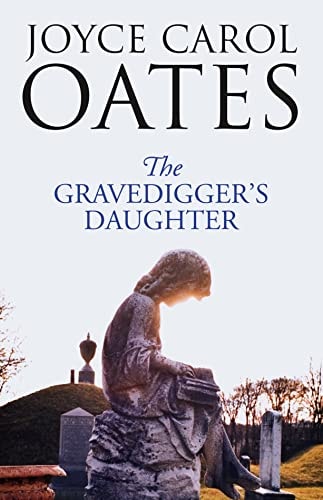
The Gravedigger's Daughter
0
0
As an Amazon Associate and affiliate partner, Menrva Books earns from qualifying purchases. Learn more
Author Description
From Publishers WeeklyStarred Review. At the beginning of Oates's 36th novel, Rebecca Schwart is mistaken by a seemingly harmless man for another woman, Hazel Jones, on a footpath in 1959 Chatauqua Falls, N.Y. Five hundred pages later, Rebecca will find out that the man who accosted her is a serial killer, and Oates will have exercised, in a manner very difficult to forget, two of her recurring themes: the provisionality of identity and the awful suddenness of male violence. There's plenty of backstory, told in retrospect. Rebecca's parents escape from the Nazis with their two sons in 1936; Rebecca is born in the boat crossing over. When Rebecca is 13, her father, Jacob, a sexton in Milburn, N.Y., kills her mother, Anna, and nearly kills Rebecca, before blowing his own head off. At the time of the footpath crossing, Rebecca is just weeks away from being beaten, almost to death, by her husband, Niles Tignor (a shady traveling beer salesman). She and son Niley flee; she takes the name of the woman for whom she has been recently mistaken and becomes Hazel Jones. Niley, a nine-year-old with a musical gift, becomes Zacharias, "a name from the bible," Rebecca tells people. Rebecca's Hazel navigates American norms as a waitress, salesperson and finally common-law wife of the heir of the Gallagher media fortune, a man in whom she never confides her past. Oates is our finest novelistic tracker, following the traces of some character's flight from or toward some ultimate violence with forensic precision. There are allusions here to the mythic scouts of James Fenimore Cooper's Leatherstocking Tales, who explored the same New York territory when it was primeval woods. Many of the passages are a lot like a blown-up photo of a bruise—ugly without seeming to have a point. Yet the traumatic pattern of the hunter and the hunted, unfolded in Rebecca/Hazel's lifelong escape, never cripples Hazel: she is liberated, made crafty, deepened by her ultimately successful flight. Like Theodor
Menrva's Summary
THE PULSE
After surviving a brutal family tragedy, Rebecca Schwart assumes a new identity to escape the cycle of violence that threatens to consume her life. Rebecca navigates the precarious landscape of mid-century America, constantly looking over her shoulder as she flees from the ghosts of her past and the looming threat of male aggression. The narrative follows her transformation into Hazel Jones, a woman who must balance the demands of motherhood and social survival while keeping her true history hidden from those closest to her. Through a non-linear structure, the novel examines the fragility of the self when confronted with sudden, life-altering trauma.
INSIDE THE PAGES
- Exploration of the provisional nature of identity and self-reinvention
- Examination of the psychological impact of domestic violence
- Use of non-linear narrative to reveal traumatic backstory
- Integration of historical settings in upstate New York
- Focus on the theme of the hunter and the hunted
- Allusions to American literary archetypes and mythic figures
- Detailed character study of a woman navigating social norms
- Forensic attention to the mechanics of flight and survival
THE COLLECTIVE ECHO
Critics have noted the novel as a quintessential example of the author's ability to track the psychological traces of trauma with clinical precision. The work is frequently discussed for its unflinching examination of male violence and the resilience required to forge a new existence from the wreckage of the past. Readers often highlight the protagonist's transformation as a compelling study in craft and survival, even as some point to the narrative's occasionally dense and unflinching focus on suffering. The consensus suggests that the book serves as a powerful, if difficult, exploration of the ways in which individuals attempt to outrun their own histories.
Page Count:
600
Publication Date:
2007-01-01
Publisher:
HarperCollins
ISBN-10:
0007258453
ISBN-13:
9780007258451
Literary Fiction
Fiction
Historical Fiction
Literature & Fiction
Domestic Noir
Family Saga
Contemporary
Psychological
Literary
Genre Fiction
Community Tags
Other Editions(3)








Reader Comments
Share Your Thoughts
No comments yet. Be the first to share your thoughts!