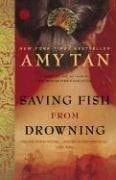
Saving Fish from Drowning
0
0
As an Amazon Associate and affiliate partner, Menrva Books earns from qualifying purchases. Learn more
Author Description
Amy Tan, who has an unerring eye for relationships between mothers and daughters, especially Chinese-American, has departed from her well-known genre in Saving Fish From Drowning. She would be well advised to revisit that theme which she writes about so well. The title of the book is derived from the practice of Myanmar fishermen who "scoop up the fish and bring them to shore. They say they are saving the fish from drowning. Unfortunately... the fish do not recover," This kind of magical thinking or hypocrisy or mystical attitude or sheer stupidity is a fair metaphor for the entire book. It may be read as a satire, a political statement, a picaresque tale with several "picaros" or simply a story about a tour gone wrong. Bibi Chen, San Francisco socialite and art vendor to the stars, plans to lead a trip for 12 friends: "My friends, those lovers of art, most of them rich, intelligent, and spoiled, would spend a week in China and arrive in Burma on Christmas Day." Unfortunately, Bibi dies, in very strange circumstances, before the tour begins. After wrangling about it, the group decides to go after all. The leader they choose is indecisive and epileptic, a dangerous combo. Bibi goes along as the disembodied voice-over. Once in Myanmar, finally, they are noticed by a group of Karen tribesmen who decide that Rupert, the 15-year-old son of a bamboo grower is, in fact, Younger White Brother, or The Lord of the Nats. He can do card tricks and is carrying a Stephen King paperback. These are adjudged to be signs of his deity and ability to save them from marauding soldiers. The group is "kidnapped," although they think they are setting out for a Christmas Day surprise, and taken deep into the jungle where they languish, develop malaria, learn to eat slimy things and wait to be rescued. Nats are "believed to be the spirits of nature--the lake, the trees, the mountains, the snakes and birds. They were numberless... They were everywhere, as were bad luck and
Menrva's Summary
THE PULSE
A group of affluent, eccentric travelers finds their planned excursion to Myanmar transformed into a surreal ordeal when their deceased guide continues to narrate their descent into chaos. After the sudden death of their organizer, Bibi Chen, the twelve friends proceed with their trip, only to be abducted by Karen tribesmen who mistake a teenage boy in their party for a divine figure. The narrative follows the group as they navigate the physical hardships of the jungle and the logical absurdity of their captors' beliefs, all while observed by the spectral, cynical presence of Bibi. The story functions as a satirical examination of Western privilege, cultural misunderstanding, and the thin line between spiritual faith and delusion.
INSIDE THE PAGES
- A spectral, omniscient narrator who provides biting commentary from beyond the grave.
- Satirical exploration of the 'white savior' trope and Western perceptions of Eastern spirituality.
- A picaresque narrative structure that emphasizes the absurdity of the characters' predicament.
- Integration of Burmese folklore and the concept of Nats as a central plot device.
- Character-driven humor derived from the clash between wealthy, spoiled tourists and their captors.
- Themes of magical thinking, hypocrisy, and the unintended consequences of well-meaning interference.
- A multi-layered perspective that shifts between the travelers' confusion and the local tribesmen's rigid belief systems.
- Vivid descriptions of the Myanmar jungle environment as a catalyst for character transformation.
THE COLLECTIVE ECHO
This work is often characterized by its departure from the author's established focus on domestic mother-daughter dynamics, opting instead for a sprawling, satirical adventure. The narrative's reliance on a ghostly narrator and the absurdity of the central kidnapping plot suggests a deliberate attempt to critique the nature of cultural tourism and Western ignorance. Readers and critics have noted the book's tonal shifts, which move between sharp social commentary and whimsical, almost fable-like storytelling. The premise highlights the tension between the characters' internal perceptions of their situation and the harsh, often bizarre reality of their environment, creating a complex, if polarizing, reading experience.
Page Count:
496
Publication Date:
2006-11-01
Publisher:
HarperPerennial
ISBN-10:
0007253885
ISBN-13:
9780007253883
Contemporary
Fiction
Adventure
Humor
Satire
Metaphysical & Visionary
Cultural
Fiction
Crimes Against
Americans
Tribes
Genre Fiction
Literature & Fiction
Contemporary
Tourists
Literary
Community Tags
Other Editions(20)

Brilliance Audio
2015
Default edition
Brilliance Audio
2015

Brilliance Audio
2014

HarperCollins Publishers
2012

Brilliance Audio
2009

Penguin USA, Inc.
2009

Brilliance Audio Lib Edn
2009

Thorndike
2007
HarperPerennial
2006

Brilliance Audio
2006

Brilliance Audio
2006

Thorndike Press
2006

Harper Perennial
2006

Brilliance Audio
2005
Penguin US
2005

GP Putnam's Sons & Random House Publishing Group
2005

Putnam
2005

FOURTH ESTATE
2005

G.P. Putnam's Sons
2005

Putnam's Sons
2005
Similar Books















Reader Comments
Share Your Thoughts
No comments yet. Be the first to share your thoughts!