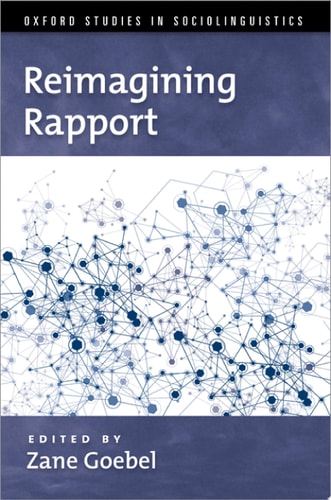
Reimagining Rapport
0
0
As an Amazon Associate and affiliate partner, Menrva Books earns from qualifying purchases. Learn more
Author Description
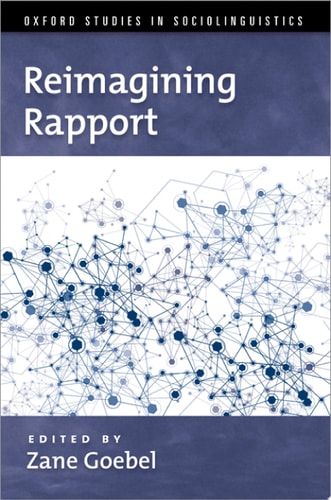
To do ethnography, a researcher must have rapport with research subjects. But what is rapport? Ethnography and ethnographic methods have increasingly become a feature of social inquiry in general and sociolinguistics in particular, and rapport is generally considered a prerequisite for fieldwork. And yet, unlike related terms such as "communication" and "phatic communion," this concept has remained largely unexamined.Reimagining Rapport turns a critical eye to the use of the term "rapport" across disciplines. The collection analyzes the very idea of rapport, both exploring how it has been shaped by historical forces and actors within sociocultural anthropology, and questioning its usefulness. Rather than viewing the term as simply denoting a type of positive social relationship that needs to be formed between researcher and consultant before research can begin, this book invites us to reimagine rapport theoretically, methodologically, and meta-methodologically. Zane Goebel and other leading sociolinguists challenge readers to think about how rapport has been constructed within these disciplines, and ultimately to see rapport as an emergent, co-constructed social relationship that is actively built during situated multimodal encounters. The contributors collectively examine the role of ideology and mediation in the construction of rapport, and argue that reconceptualizing research-subject relationships is essential for establishing more sophisticated ways of understanding, interpreting, and representing research context.A valuable resource for scholars and students of sociolinguistics and linguistic anthropologyas well as for others engaged in ethnographic fieldworkReimagining Rapport is the first collection to provide an in-depth investigation of this critically important but previously unexamined concept.
Menrva's Summary
THE THESIS
This collection investigates the conceptual ambiguity of 'rapport' in ethnographic research, questioning its traditional status as a static prerequisite for fieldwork. Editor Zane Goebel and a team of contributors analyze how historical and ideological forces have shaped the term within sociocultural anthropology and sociolinguistics. The text argues that rapport should be understood not as a pre-existing condition, but as an emergent, co-constructed social relationship built through situated, multimodal interactions.
THE SCOPE MAP
What You Will Find
- Critical analysis of the historical development of rapport within social inquiry.
- Theoretical frameworks for viewing rapport as an emergent, mediated phenomenon.
- Methodological discussions on the role of ideology in researcher-subject dynamics.
Scope Limits
- The text does not provide a step-by-step manual for building rapport in specific field settings.
- It does not focus on quantitative data collection methods, prioritizing qualitative ethnographic inquiry.
THE AUTHORITY PERSPECTIVE
Scholars in linguistic anthropology and sociolinguistics identify this collection as a primary resource for deconstructing long-held methodological assumptions in fieldwork. Readers frequently note the academic density of the prose, which is intended for advanced students and professional researchers in the social sciences.
Page Count:
203
Publication Date:
2021-01-01
Publisher:
Oxford University Press
ISBN-10:
0190917091
ISBN-13:
9780190917098
Social Science
Ethnography
Cultural Anthropology
English & College Success
English
Linguistics
Linguistic Anthropology