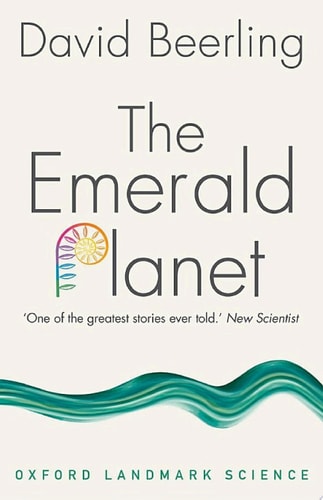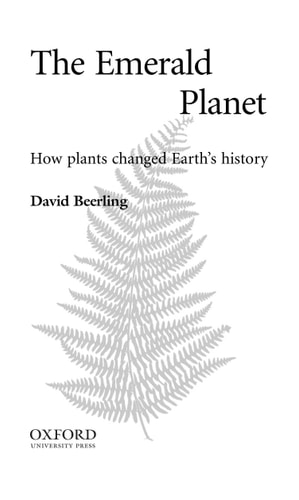
The Emerald Planet: How Plants Changed Earth's History
0
0
As an Amazon Associate and affiliate partner, Menrva Books earns from qualifying purchases. Learn more
Author Description
Global warming is contentious and difficult to measure, even among the majority of scientists who agree that it is taking place. Will temperatures rise by 2ºC or 8ºC over the next hundred years? Will sea levels rise by 2 or 30 feet? The only way that we can accurately answer questions like these is by looking into the distant past, for a comparison with the world long before the rise of mankind.We may currently believe that atmospheric shifts, like global warming, result from our impact on the planet, but the earth's atmosphere has been dramatically shifting since its creation. This book reveals the crucial role that plants have played in determining atmospheric change - and hence the conditions on the planet we know today. Along the way a number of fascinating puzzles arise: Why did plants evolve leaves? When and how did forests once grow on Antarctica? How did prehistoric insects manage to grow so large? The answers show the extraordinary amount plants can tell us about the history of the planet -- something that has often been overlooked amongst the preoccuputations with dinosaur bones and animal fossils.David Beerling's surprising conclusions are teased out from various lines of scientific enquiry, with evidence being brought to bear from fossil plants and animals, computer models of the atmosphere, and experimental studies. Intimately bound up with the narrative describing the dynamic evolution of climate and life through Earth's history, we find Victorian fossil hunters, intrepid polar explorers and pioneering chemists, alongside wallowing hippos, belching volcanoes, and restless landmasses.
Menrva's Summary
THE THESIS
This book investigates the fundamental role that plants have played in shaping Earth's atmospheric composition and climate history over geological time. David Beerling, a professor of plant science, synthesizes data from paleobotany, atmospheric modeling, and experimental biology to argue that plant evolution is a primary driver of environmental change. By examining the distant past, the author provides a framework for understanding current climate shifts through the lens of long-term planetary evolution.
THE SCOPE MAP
What You Will Find
- Analysis of plant evolution including the development of leaves and forest ecosystems.
- Investigations into prehistoric climate conditions, such as the presence of forests in Antarctica.
- Integration of fossil evidence, computer climate models, and historical accounts of scientific discovery.
Scope Limits
- The text does not provide a comprehensive guide to modern climate policy or political solutions.
- It focuses primarily on the biological and geological history of plants rather than animal-centric paleontology.
THE AUTHORITY PERSPECTIVE
Experts and readers frequently note the accessibility of Beerling's prose, which balances rigorous scientific inquiry with engaging historical anecdotes. The work is widely regarded as a significant contribution to the field of paleoclimatology for its unique focus on botanical influence.
Page Count:
304
Publication Date:
2007-04-05
Publisher:
Oxford University Press
ISBN-10:
0192806025
ISBN-13:
9780192806024
Science
Natural History
Paleontology
Botany
Earth Science
Climate Change