Smart Swarm: Using Animal Behaviour to Organise Our World
0
0
As an Amazon Associate and affiliate partner, Menrva Books earns from qualifying purchases. Learn more
Author Description
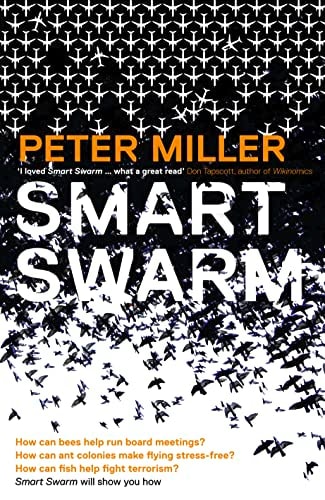
How Understanding Flocks, Schools and Colonies Can Make Us Better at Communicating, Decision Making and Getting Things Done. The modern world may be obsessed with speed and productivity, but twenty-first century humans actually have much to learn from the ancient instincts of swarms.A fascinating new take on the concept of collective intelligence and its colourful manifestations in some of our most complex problems, Smart Swarm introduces a compelling new understanding of the real experts on solving our own complex problems relating to such topics as business, politics, and technology. Based on extensive globe-trotting research, this lively tour from National Geographic reporter Peter Miller introduces thriving throngs of ant colonies, which have inspired computer programs for streamlining factory processes, telephone networks, and truck routes; termites, used in recent studies for climate-control solutions; schools of fish, on which the U.S. military modelled a team of robots; and many other examples of the wisdom to be gleaned about the behaviour of crowds-among critters and corporations alike.In the tradition of James Surowiecki's The Wisdom of Crowds and the innovative works of Malcolm Gladwell, Smart Swarm is an entertaining yet enlightening look at small-scale phenomena with big implications for us all.
Menrva's Summary
THE THESIS
Can the decentralized, instinctual behaviors of animal swarms provide a blueprint for solving complex human problems in business, technology, and logistics? Peter J. Miller, a veteran National Geographic reporter, synthesizes years of global field research to argue that collective intelligence—the ability of a group to solve problems without a central leader—offers a superior model for modern organizational efficiency. By examining the biological mechanisms of ants, bees, termites, and fish, Miller presents a framework for applying these natural algorithms to human systems, suggesting that our obsession with top-down control often obscures more effective, self-organizing solutions.
THE SCOPE MAP
What You Will Find
- Case studies of biological swarms including ant colonies, termite mounds, and schools of fish.
- Applications of swarm intelligence in modern logistics, such as truck routing and telecommunications network optimization.
- Analysis of how decentralized decision-making models improve corporate and military team performance.
- Exploration of biomimicry as a methodology for climate-control engineering and software development.
THE AUTHORITY PERSPECTIVE
The subject matter points to an accessible, journalistic exploration of biomimicry that bridges the gap between biological research and practical management theory. The framing suggests a text intended for general readers interested in organizational behavior and the intersection of nature and technology.
Page Count:
304
Publication Date:
2010-01-01
Publisher:
Collins
ISBN-10:
0007279906
ISBN-13:
9780007279906
Science
Nature
Business
Technology
Management
Group Identity
Sociology
Community Tags
Similar Books