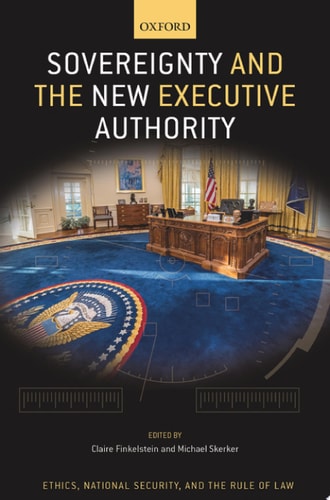
Sovereignty and the New Executive Authority: Ethics, National Security, and the Rule of Law
0
0
As an Amazon Associate and affiliate partner, Menrva Books earns from qualifying purchases. Learn more
Author Description
The idea of sovereignty and the debates that surround it are not merely of historical, academic, or legal interest: they are also potent, vibrant issues and as current and relevant as today's front page news in the United States and in other Western democracies. In the post- 9/11 United States, the growth of the national security state has resulted in a growing struggle to maintain the legal and ethical boundaries surrounding executive authority, boundaries that help to define and protect democratic governance. These post-9/11 developments and their effect on the scope of presidential power present hard questions and are fueling today's intense debates among political leaders, citizens, constitutional scholars, historians, and philosophers.This volume will contribute to the public conversation on the nature of executive authority and its relation to the broader topic of sovereignty in several ways. First, readers will learn that the current vital questions surrounding the nature of executive authority and presidential power have their intellectual roots in historical and philosophical writings about the nature of sovereignty. Second, sovereignty has historically been a complicated topic; this volume helps identify the terms of the debate. Third, and most critically, citizens' understanding of the concept of sovereignty is essential to grasping the available options for confronting current challenges to the rule of law in democratic societies.The volume's 15 essays, drawn from among the disciplines of law, political, science, philosophy, and international relations, covers an expansive series of topics, from historical theories and international affairs, to governmental transparency and legitimacy. The volume also focuses on the changes in the concept of sovereignty post-9/11 in the United States and their impact on democracy and the rule of law, particularly in the area of national security practice.
Menrva's Summary
THE THESIS
This volume investigates the tension between modern executive authority and the foundational principles of sovereignty within democratic governance. Edited by Claire Oakes Finkelstein and Michael Skerker, the text synthesizes perspectives from law, political science, and philosophy to examine how post-9/11 national security practices challenge the rule of law. The authors argue that understanding historical and philosophical definitions of sovereignty is a prerequisite for addressing contemporary crises in presidential power and governmental legitimacy.
THE SCOPE MAP
What You Will Find
- Analysis of historical and philosophical theories regarding the nature of sovereignty.
- Examination of the expansion of the national security state in the United States.
- Interdisciplinary essays covering governmental transparency, legitimacy, and international affairs.
Scope Limits
- The text does not provide a comprehensive legal manual for current administrative procedures.
- It does not offer a singular policy solution but rather a framework for ongoing public debate.
THE AUTHORITY PERSPECTIVE
Experts identify this volume as a rigorous interdisciplinary resource for scholars and students of constitutional law and political theory. Readers frequently note the academic density of the prose, which serves as a foundational text for those analyzing the intersection of ethics and national security policy.
Page Count:
376
Publication Date:
2018-01-01
Publisher:
Oxford University Press
ISBN-10:
0190922567
ISBN-13:
9780190922566
Philosophy
Local government
Law
Executive power
National security
Sovereignty
Professional Career & Trade
Constitutional Law
Ethics
Community Tags
Similar Books












Reader Comments
Share Your Thoughts
No comments yet. Be the first to share your thoughts!