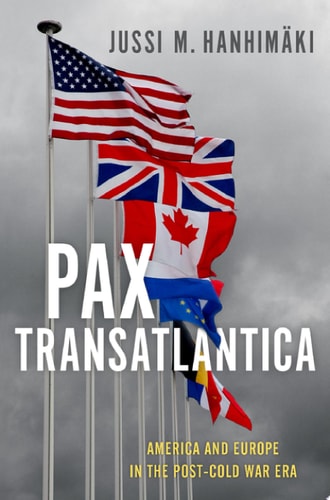
Pax Transatlantica: America and Europe in the Post-Cold War Era
0
0
As an Amazon Associate and affiliate partner, Menrva Books earns from qualifying purchases. Learn more
Author Description
Is the West finished as a political idea? In recent years, observers have begun pointing to signs that this transatlantic community is eroding. When the European Union expanded, the classic European nation state was in decline. Now, nationalism is on the rise. Furthermore, nations within the EU are less willing to cooperate with the US on policies that require sacrifice and risks, such as using military force alongside the US. Today, following the twin shocks of Brexit and Trump's election, the concept of a unified Western transatlantic community seems to be a relic. But, in Pax Transatlantica, the international historian Jussi Hanhimäki explains why the West is far from over. Hanhimäki argues that-despite Trump's inflammatory, dismissive rhetoric-NATO continues to provide robust security for its member states. NATO has survived by expanding its remit and scope, and it is viewed favorably by member states overall. Moreover, the transatlantic relationship boasts the richest and most closely connected transcontinental economy in the world. Despite the potential fallout from current trade wars-especially between the US and China-and the rise of economic nationalism, the West still benefits from significant transatlantic trade and massive investment flows. Lastly, Hanhimäki traces the parallel evolution of domestic politics on both sides of the Atlantic, focusing on the rise of populism. He contends that populism is not causing a rift between the US and Europe. Rather, the spread of populism evinces that their politics are in fact closely integrated. Shifts and even crises abound in the history of the transatlantic relationship. Still, the West endures. Conflicts, rather than undermining the relationship, illustrate its resilience.
Menrva's Summary
THE THESIS
Does the rise of nationalism and political populism signal the terminal decline of the transatlantic alliance, or does it reflect a deeper, ongoing integration between the United States and Europe? Historian Jussi M. Hanhimäki utilizes his expertise in international relations to examine the structural resilience of Western institutions. He posits that despite inflammatory rhetoric and shifting domestic priorities, the economic and security frameworks established post-Cold War remain robust and continue to bind these regions together.
THE SCOPE MAP
What You Will Find
- Analysis of NATO's expansion and its continued security relevance
- Examination of transatlantic economic interdependency and investment flows
- Comparative study of populist political movements in the US and Europe
- Historical context of transatlantic crises and their role in institutional evolution
Scope Limits
- Does not provide a comprehensive history of the entire Cold War period
- Focuses primarily on the political and economic relationship rather than cultural or social history
THE AUTHORITY PERSPECTIVE
Experts recognize this work as a significant contribution to contemporary geopolitical analysis, noting its counter-intuitive focus on institutional resilience. Readers frequently highlight the author's ability to synthesize complex economic data with political history to provide a clear, evidence-based argument.
Page Count:
194
Publication Date:
2021-01-01
Publisher:
Oxford University Press
ISBN-10:
0190922184
ISBN-13:
9780190922184
History
Geopolitics
International relations
European History
World Civilization
American History
Community Tags
Similar Books