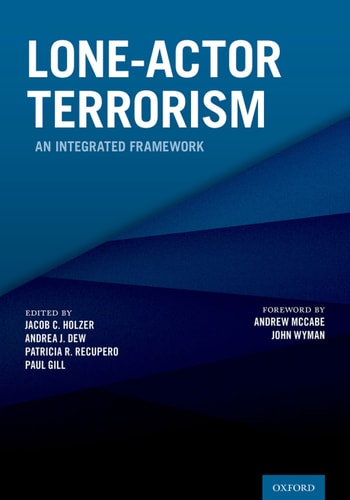
Lone-Actor Terrorism: An Integrated Framework
0
0
As an Amazon Associate and affiliate partner, Menrva Books earns from qualifying purchases. Learn more
Author Description
Lone-actor terrorism has unfortunately been on the rise in recent decades, causing major adverse societal effects in the United States and abroad. While lone-actor terrorists can be driven by a range of identifiable factors such as extremist views or availability of weapons, the process of becoming and identifying these individuals is deeply complicated. Lone-Actor Terrorism: An Integrated Framework outlines the societal causes and impacts of lone-actor terrorism from a multi-disciplinary, international perspective. Drawing together seasoned insights across clinical and forensic mental health, sociology, criminology, law, military and intelligence, and security, this volume explores patterns common to lone-actor terrorists across four major sections: historical and case examples, clinical aspects, non-clinical professional and allied perspectives, and assessment and potential approaches to reducing the risk of lone-actor terrorism. Contributors describe both individual clinical factors affecting lone-actors, including developmental aspects, mental health variables, psychoactive drugs, psychometrics and linguists, along with broader social factors such as propaganda and rhetoric, social media, and geographical considerations. This volume concludes with a review of the available threat and risk assessment tools applicable to lone-actor terrorism cases and provides guidance for professionals seeking to reduce risk.While there is no uniform approach to the concept of lone-actor terrorism, this edited volume provides a diverse yet authoritative overview for those interested in better understanding the threats of lone-actor terrorism and its professional response.
Menrva's Summary
THE THESIS
This volume investigates the complex, multi-faceted drivers and societal impacts of lone-actor terrorism through an integrated, interdisciplinary framework. The authors, including Jonathan Tallant, Kristie Miller, and Samuel Baron, curate contributions from experts in clinical mental health, sociology, criminology, and intelligence. By synthesizing these diverse fields, the text establishes a comprehensive model for understanding the developmental, social, and psychological pathways that lead individuals toward lone-actor violence.
THE SCOPE MAP
What You Will Find
- Historical case studies and comparative international examples of lone-actor incidents.
- Analysis of clinical factors including mental health variables, psychometrics, and linguistic patterns.
- Examination of external influences such as propaganda, social media rhetoric, and geographical variables.
- A review of current threat and risk assessment tools for security professionals.
Scope Limits
- The text does not provide a single, universal predictive model, acknowledging the inherent difficulty in identifying lone actors before an incident occurs.
- It focuses primarily on professional and academic analysis rather than providing a layperson's guide to personal safety.
THE AUTHORITY PERSPECTIVE
Experts identify this volume as a foundational interdisciplinary resource for professionals in security, law enforcement, and mental health. Readers frequently note the academic density of the prose, which effectively bridges the gap between clinical psychology and intelligence-led threat assessment.
Page Count:
419
Publication Date:
2022-01-01
Publisher:
Oxford University Press
ISBN-10:
0190929812
ISBN-13:
9780190929817
Psychology
Security Studies
Sociology
Allied Health
Criminology
Medical
Community Tags
Similar Books