China and the True Jesus: Charisma and Organization in a Chinese Christian Church
0
0
As an Amazon Associate and affiliate partner, Menrva Books earns from qualifying purchases. Learn more
Author Description
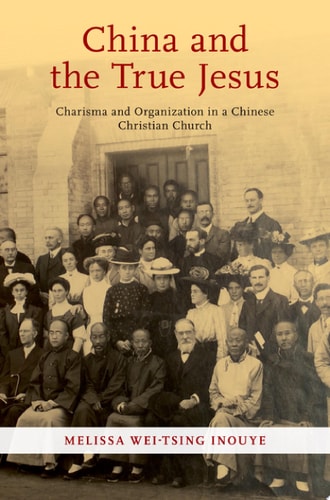
In 1917, the Beijing silk merchant Wei Enbo's vision of Jesus sparked a religious revival, characterized by healings, exorcisms, tongues-speaking, and, most provocatively, a call for a return to authentic Christianity that challenged the Western missionary establishment in China. This revival gave rise to the True Jesus Church, China's first major native denomination. The church was one of the earliest Chinese expressions of the twentieth century charismatic and Pentecostal tradition which is now the dominant mode of twenty-first century Chinese Christianity. To understand the faith of millions of Chinese Christians today, we must understand how this particular form of Chinese community took root and flourished even throughout the wrenching changes and dislocations of the past century.The church's history links together key themes in modern Chinese social history, such as longstanding cultural exchange between China and the West, imperialism and globalization, game-changing advances in transport and communications technology, and the relationship between religious movements and the state in the late Qing (circa 1850-1911), Republican (1912-1949), and Communist (1950-present-day) eras. Vivid storytelling highlights shifts and tensions within Chinese society on a human scale. How did mounting foreign incursions and domestic crises pave the way for Wei Enbo, a rural farmhand, to become a wealthy merchant in the early 1900s? Why did women in the 1920s and 30s, such as an orphaned girl named Yang Zhendao, devote themselves so wholeheartedly to a patriarchal religious system? What kinds of pressures induced church leaders in a meeting in the 1950s to agree that "Comrade Stalin" had saved many more people than Jesus? This book tells the striking but also familiar tale of the promise and peril attending the collective pursuit of the extraordinary-how individuals within the True Jesus Church in China over the past century have sought to muster divine and human resources to t
Menrva's Summary
THE THESIS
This work investigates how the True Jesus Church emerged as a significant indigenous religious movement in China and maintained its organizational vitality through the political and social upheavals of the twentieth century. Melissa Wei-Tsing Inouye, a scholar of Chinese history and religion, utilizes archival research and personal narratives to examine the intersection of charismatic religious expression and institutional development. The book argues that the church's success is rooted in its ability to adapt to shifting national contexts while providing a distinct community framework for its members.
THE SCOPE MAP
What You Will Find
- Historical analysis of the True Jesus Church from 1917 to the present day.
- Examination of the influence of Western missionary presence versus indigenous Chinese religious expression.
- Case studies of individual members, including Wei Enbo and Yang Zhendao, to illustrate broader social trends.
- Analysis of the church's navigation of the Qing, Republican, and Communist political eras.
Scope Limits
- The text does not provide an exhaustive theological treatise on the church's specific doctrines.
- The study focuses primarily on the social and organizational history rather than a global comparative analysis of Pentecostalism.
THE AUTHORITY PERSPECTIVE
Scholars and historians recognize this text as a significant contribution to the study of modern Chinese Christianity and the role of indigenous religious movements in the region. Readers frequently note the balance between rigorous historical documentation and the accessible, human-centered narrative style employed by the author.
Page Count:
405
Publication Date:
2018-01-01
Publisher:
Oxford University Press
ISBN-10:
0190923482
ISBN-13:
9780190923488
Religion
History
Christianity
Asian History
Pentecostalism
Special Topics
Sociology
China Studies
Church History
Missions china
Community Tags
Similar Books