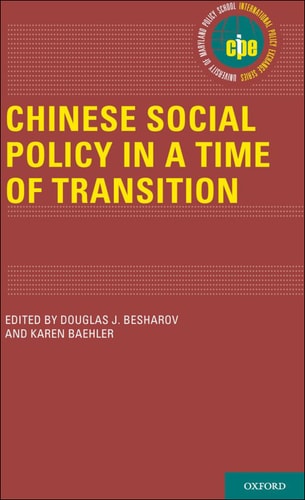
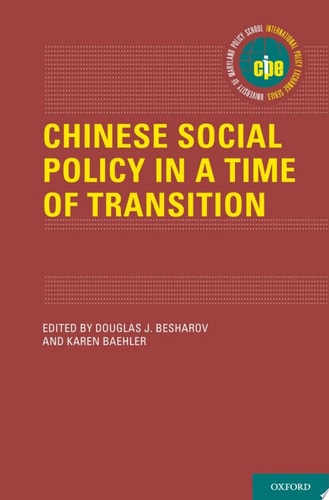
Chinese Social Policy in a Time of Transition
0
0
As an Amazon Associate and affiliate partner, Menrva Books earns from qualifying purchases. Learn more
Author Description
The story of China's spectacular economic growth is well known. Less well known is the country's equally dramatic, though not always equally successful, social policy transition. Between the mid- 1990s and mid-2000s---the focal period for this book---China's central government went a long way toward consolidating the social policy framework that had gradually emerged in piecemeal fashion during the initial phases of economic liberalization. Major policy decisions during the focal period included adopting a single national pension plan for urban areas, standardizing unemployment insurance, (re)establishing nationwide rural health care coverage, opening urban education systems to children of rural migrants, introducing trilingual education policies in ethnic minority regions, expanding college enrolment, addressing the challenge of HIV/AIDS more comprehensively, and equalizing social welfare spending across provinces, among others. Unresolved is the direction of policy in the face of longer-term industrial and demographic trends---and the possibility of a chronically weak global economy. Chinese Social Policy in a Time of Transition offers scholars, practitioners, students, and policymakers a foundation from which to explore those issues based on a composite snapshot of Chinese social policy at its point of greatest maturation prior to the 2007 global crisis.
Menrva's Summary
THE THESIS
This book investigates the consolidation and evolution of China's social policy framework during the critical transition period between the mid-1990s and mid-2000s. Douglas Besharov and Karen J. Baehler, both established scholars in public policy, utilize a composite analysis of government reforms to argue that this era represented the maturation of China's social welfare systems. By examining specific legislative shifts in pensions, healthcare, and education, the authors provide a structured framework for understanding how the state balanced rapid economic liberalization with the necessity of social stability. The work serves as a baseline for evaluating the long-term sustainability of these policies in the face of shifting demographic and industrial pressures.
THE SCOPE MAP
What You Will Find
- Analysis of national pension plan standardization and unemployment insurance reforms.
- Examination of rural healthcare re-establishment and urban education access for migrant children.
- Evaluation of social welfare spending equalization across diverse Chinese provinces.
- Assessment of policy responses to public health challenges such as HIV/AIDS and ethnic minority education.
THE AUTHORITY PERSPECTIVE
Experts identify this work as a foundational text for understanding the structural shifts in Chinese governance during the decade preceding the 2007 global financial crisis. Readers frequently note the academic density of the prose, which makes it a primary resource for students and policymakers analyzing the intersection of economic growth and social welfare in developing nations.
Page Count:
311
Publication Date:
2013-01-01
Publisher:
Oxford University Press
ISBN-10:
0199990336
ISBN-13:
9780199990337
Economics
History
Public Policy
Sociology
China Studies
Asian History
Introduction to Social WorkWelfare
Social Science
China
Community Tags
Other Editions(2)
Similar Books